Whole House Water Filter Maintenance Guide: Annual and Ongoing Care
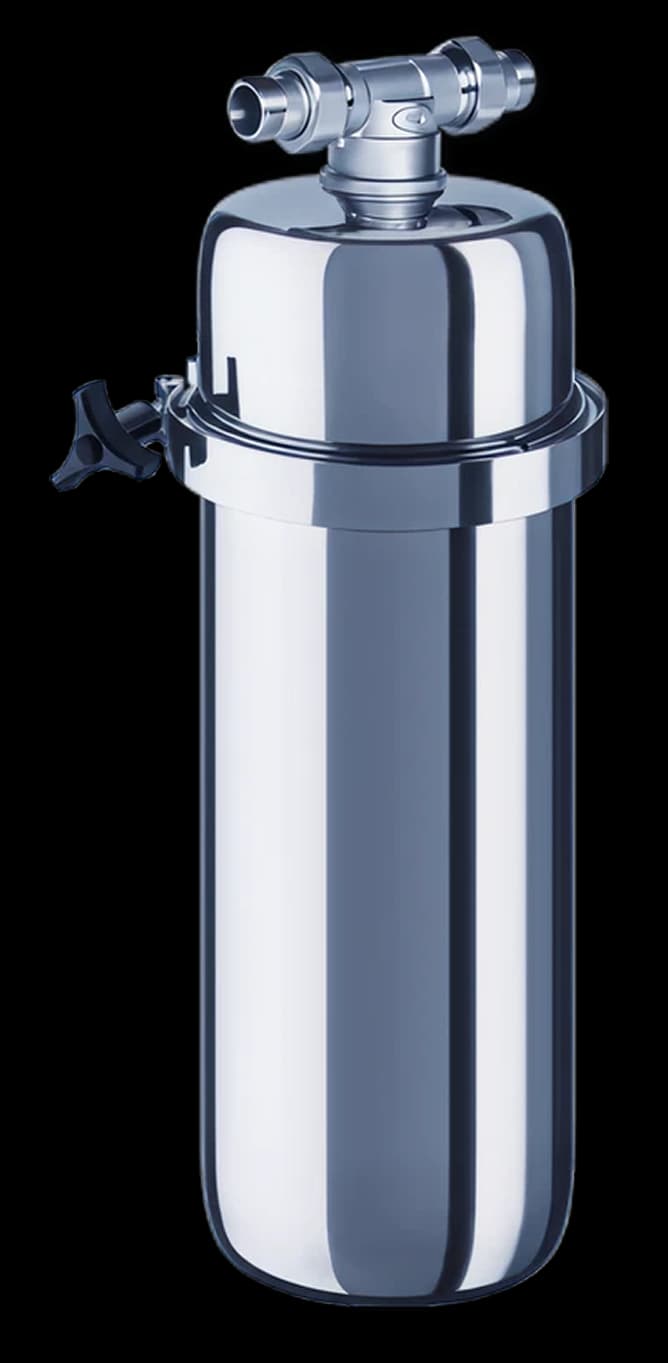
A whole-house point-of-entry water filter requires very little maintenance — the main obligation is an annual cartridge replacement, which takes approximately ten minutes. Beyond that, periodic checks of fittings, O-rings, and the particle pre-filter (where fitted) are the extent of the ongoing maintenance requirement.
This guide covers the full maintenance schedule for Mam Nature POE systems: what to do, how often, and the early warning signs that something needs attention before the scheduled service date.
The Annual Cartridge Replacement
The amyloid fine filter cartridge has a rated service life of 12 months for a household of four on municipal water. After 12 months, the media is approaching saturation and protection begins to diminish. Replace annually regardless of whether you notice any change in taste or pressure — the cartridge shows no visible signal when saturated.
Replacement procedure: close the bypass valve (this diverts water around the filter while keeping the rest of the house supplied). Open a downstream cold tap to release pressure in the filter housing. Unscrew the sump (housing bowl) by rotating clockwise when viewed from below — hand-tight only, no tools. Remove the old cartridge. Rinse the sump interior with clean water. Inspect the O-ring. Install the new cartridge (orientation matters — check the arrow on the cartridge matches the flow direction marked on the housing). Thread the sump back on by hand. Open the bypass valve slowly. Check for drips. Open a downstream tap and flush for five minutes.
Total time: ten minutes. Required equipment: the replacement cartridge. No tools, no plumber, no water supply interruption to the house during the service.
O-Ring Inspection and Replacement
The O-ring seals the sump to the housing body. If the O-ring is cracked, flattened, or has lost elasticity, the seal fails and water appears around the sump joint. This is the most common post-installation maintenance issue.
Inspect the O-ring at every cartridge replacement. It should be smooth, round in cross-section, and resilient when pressed. If it shows surface cracking, a flat profile from sustained compression, or any deformation, replace it. Spare O-rings are included in the system box (two spares). If you have used both, the O-ring specification (material, inner diameter, cross-section) is printed on the housing documentation — replacement O-rings are available from Mam Nature and from plumbing suppliers if needed urgently.
A small smear of food-safe silicone grease on the O-ring before reseating reduces friction and prolongs seal life. Do not use petroleum-based lubricants — these degrade rubber O-ring compounds over time.
The Particle Pre-Filter — Auto-Backwash and Inspection
Systems that include the particle pre-filter (Essential Plus, Complete Set, Complete Set Plus) have a built-in auto-backwash cycle. The controller runs a timed backwash that reverses water flow through the filter mesh, flushing accumulated sediment to drain. The factory default is 1–2 times per year for municipal water. For well water or high-sediment supply, increase the frequency.
The auto-backwash requires no manual action — set the timer at installation and the controller handles subsequent cycles automatically. Check the display occasionally to confirm the cycle has run. If the display shows an error code or the backwash cycle does not complete (indicated by the controller not returning to the idle display after the expected cycle duration), refer to the installation guide's troubleshooting section.
Every two to three years, inspect the particle pre-filter housing and its internal mesh screen. With the system isolated on the bypass and pressure released, remove the pre-filter sump and check the mesh for physical damage or heavy clogging beyond what the auto-backwash addresses. Clean with a soft brush under running water if needed. This inspection is rarely necessary for municipal water installations but is recommended for well water or where auto-backwash frequency has been low.
The Water LIME — No Maintenance Required
The Water LIME anti-limescale device uses a permanent magnet — there are no consumables, no media, no moving parts. There is nothing to replace or service. The magnetic element is rated for the lifetime of the installation. No annual action is required.
Fitting and Housing Checks
Once per year at the cartridge replacement, run a visual check on all fittings and connections. Look for moisture, mineral deposits, or discolouration on or around the bypass valve, the housing inlet/outlet connections, and the sump joint. A dry rag pressed against each fitting confirms whether any dampness is present.
Minor seeps at BSP threaded connections can be resolved by isolating the system, draining the housing, and adding 2–3 additional turns of PTFE tape to the leaking connection. The housing should not be disturbed unless the sump joint or connection fittings are the identified leak source — the bypass allows the system to be isolated for these repairs without cutting off the household water supply.
Signs That Require Early Attention
Replace the cartridge before the annual date if: water flow rate drops noticeably at taps served by the filter; the filtered water develops an unusual taste or odour (not present at installation); visible turbidity appears in the filtered output. These are signs of media saturation or breakthrough.
Check fittings urgently if: water appears around the housing body or connections; the sump feels loose or turns freely without creating pressure resistance; the bypass valve becomes very difficult to operate. The bypass valve should operate smoothly — increasing resistance usually means the valve seat needs cleaning or replacement, which is a straightforward part available from Mam Nature.
Annual cartridge replacements shipped directly to your door — subscribe and never miss the maintenance date.
Shop the Swiss Water CartridgeRelated Resources
Frequently Asked Questions
How do I know when to replace the cartridge?
Replace annually for a household of four on municipal water — 12 months from the installation date or the last replacement date. Replace earlier if you notice a drop in flow rate, a change in taste or odour, or visible cloudiness in the filtered water. Set a calendar reminder at the time of installation so the annual date is not missed.
What happens if I miss the annual cartridge replacement?
A saturated cartridge provides progressively less filtration. Contaminants pass through at increasing rates as media capacity is exhausted. In the case of PFAS adsorption, a heavily overloaded carbon component can also begin to release previously captured compounds back into the water. Replace as soon as possible if the annual date has passed — there is no benefit in waiting.
Can I clean and reuse the cartridge?
No. The amyloid fibril media is not washable or regeneratable by the end user. The cartridge must be replaced annually. This is also the case for standard activated carbon cartridges — cleaning does not restore adsorption capacity.
How do I set the auto-backwash timer on the particle pre-filter?
The timer is set at installation using the backwash controller display. Navigation instructions are in the installation guide included with the Essential Plus, Complete Set, and Complete Set Plus. For municipal water, a backwash interval of twice per year is standard. For well water with visible sediment, monthly or quarterly is appropriate.
Does maintenance differ for well water vs municipal water?
Yes. Well water typically carries higher sediment loads, which accelerates particle pre-filter clogging and may require more frequent auto-backwash cycles and earlier fine filter cartridge replacement. Monitor flow rate more frequently in a well water installation and replace the fine filter cartridge when flow drops noticeably rather than waiting for the 12-month mark.