Can You Install a Whole-House Water Filter Without a Plumber?
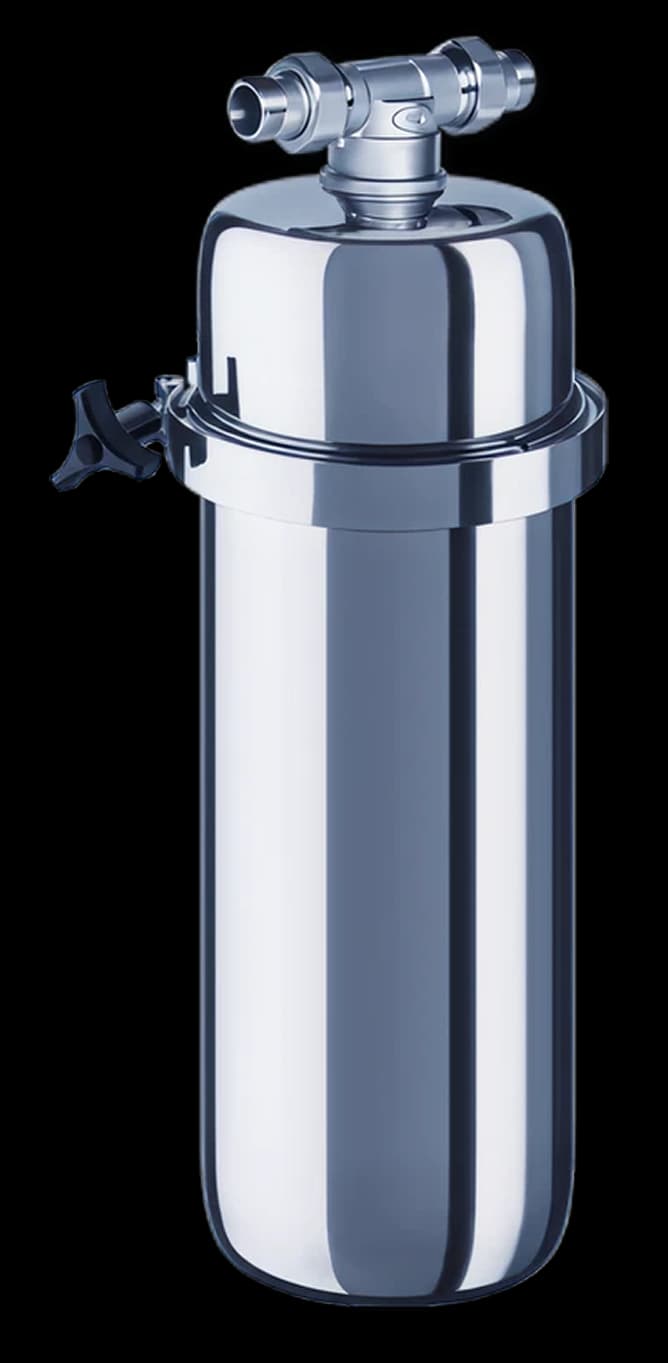
The most common question after buying a whole-house water filter is whether you need a plumber. For the connection to your mains supply, the answer is yes — we recommend a qualified plumber. The job means cutting into a pressurised supply line and making leak-tight joints, and a professional does it quickly, certifies the work, and guarantees it.
This guide explains what a professional installation involves, how long it takes, what it typically costs, and what to have ready so the visit is quick and the quote is accurate. It applies to any whole-house POE system with standard 1" BSP fittings, including the Mam Nature Essential, Essential Plus, Complete Set, and Complete Set Plus.
The one task you can comfortably handle yourself afterwards is the annual cartridge swap — it is tool-free, takes about ten minutes, and is covered at the end of this guide.
What a Professional Installation Involves
A plumber fits the filter inline on your cold mains supply, after the main stop cock and before the first branch to any tap, toilet, boiler, or appliance — so 100% of household water passes through it. The work is: shutting off and depressurising the supply, cutting out a short section of pipe, fitting the bypass valve, mounting the housing bracket, making the inlet and outlet connections, then commissioning and flushing the system.
On standard pipe — 22mm copper, PEX, or modern MDPE — a plumber uses compression or push-fit connectors and completes the job in under an hour. No soldering or specialist threading is required for these materials, which is why the labour cost is modest.
If your system includes a Particle Filter (Essential Plus, Complete Set, Complete Set Plus) or Water LIME (Complete Set, Complete Set Plus), the plumber installs the components in sequence: Water LIME → Particle Filter → Fine Filter → Dynamizer (if included). The included installation guide specifies the order and spacing.
Why We Recommend a Plumber
Water under mains pressure requires respect. A fitting that looks tight but seats poorly can fail later and cause significant water damage. A plumber pressure-tests the connections before leaving and stands behind the work — many home insurance policies and product warranties also expect modifications to the mains to be made by a qualified installer.
A professional is essential if your supply pipe is lead, iron, or galvanised steel (common in pre-1970 European housing). Lead in particular needs careful handling, and the filter install is a good opportunity to have the lead section replaced in the same visit. A plumber is also the right call if the mains run is hard to reach — inside a finished wall, under a concrete floor, or anywhere cutting would mean structural work.
If you are renting, get your landlord's written consent before any work — a permanent modification to the mains almost always requires it. Many landlords will agree to a professional installation at the tenant's cost.
How Much Professional Installation Costs
Cost is driven by three things: your pipe material (copper, PEX, and MDPE are quick; lead, iron, or galvanised add time and may need a section replaced), how accessible the mains run is, and how many components your system has (a single Essential housing is faster than a Complete Set Plus with Water LIME and a dynamizer).
Because plumber rates vary widely by country and region, ask for a fixed quote rather than an hourly estimate, and mention the pipe material and the number of components when you do — that lets the plumber price the visit accurately. For the full picture on running costs, see our whole-house filter cost guide.
What to Have Ready for the Plumber
Confirm your pipe material and diameter before the visit — 22mm copper or 25mm MDPE is standard across most of Europe; 15mm copper needs a 15-to-22mm reducer; US installations use 1" NPT. The plumber sources the connection fittings for your specific pipe, but knowing the material up front makes the quote accurate and avoids a second visit.
Make sure the installation point is accessible and frost-free (cartridges and O-rings are rated to a minimum of about 4°C), with roughly 30cm of clearance below the housing for future cartridge changes. Check that your main stop cock shuts off fully — a seized or weeping stop cock makes any inline work difficult, and is worth servicing first.
Hand the plumber the box: every Mam Nature POE system ships with the bypass valve assembly, a drill template for the bracket, all BSP-threaded connections pre-fitted to the housing, spare O-rings, and an illustrated installation guide. With those in hand the plumber has the full specification and the job is straightforward.
The One Job You Can Do Yourself — the Annual Cartridge Swap
Once the system is installed, the only recurring task is replacing the cartridge once a year, and it needs no plumber and no tools. Close the bypass valve to divert water around the filter, open a downstream tap to release pressure, unscrew the housing sump by hand, swap the cartridge, hand-tighten the sump (the O-ring makes the seal — do not use tools), re-open the bypass, check for leaks, and flush for five minutes. Total time: about ten minutes.
Set a calendar reminder for 12 months from installation. Replace the cartridge earlier if you notice reduced flow, a change in taste or odour, or visible cloudiness — these are signs the cartridge is saturated.
Every system ships with a full installation kit and illustrated guide for your plumber.
Shop POE SystemsRelated Resources
Frequently Asked Questions
Can I install a whole house water filter myself instead of using a plumber?
On simple, accessible pipe (22mm copper, PEX, or MDPE) the connection can be made with push-fit or compression fittings, so it is technically possible — but we recommend a plumber. The work is on a pressurised mains line where a poorly seated joint can cause serious water damage, and a professional pressure-tests and guarantees the connection. The part you can always do yourself is the annual cartridge swap, which is tool-free.
How long does professional installation take?
A plumber familiar with POE filter installations typically completes the job in one to two hours on standard pipe, including commissioning and flushing the system at the end. Lead, iron, or galvanised supply pipe, or a hard-to-reach mains run, will add time.
How much does it cost to have a plumber install the filter?
It depends on your pipe material, how accessible the mains run is, and how many components your system has, and plumber rates vary by country — so ask for a fixed quote and mention the pipe material and component count when you do. The system itself ships with the bypass valve, drill template, fittings, and guide, so the plumber only charges for labour and any pipe-specific connectors.
What pipe materials need a professional rather than a quick install?
Lead, iron, and galvanised steel pipe (common in pre-1970 buildings) need specialist cutting and, for lead, careful handling — these always warrant a plumber, who can also replace a lead section in the same visit. Copper, PEX, and MDPE are quick to connect with standard fittings.
What should I give the plumber on the day?
Hand over the full system box — it includes the bypass valve assembly, drill template, all BSP-threaded connections pre-fitted to the housing, spare O-rings, and the illustrated installation guide. Confirm your pipe material and diameter beforehand so the plumber brings the correct connection fittings.
Sources & References
- Water Regulations Advisory Scheme (WRAS). Water fittings regulations guidance.
- Water Research Centre (WRc). Guidance on pipe materials in residential water supply.