How Long Does a Whole House Water Filter Last? Housing, Cartridge, and System Lifespan
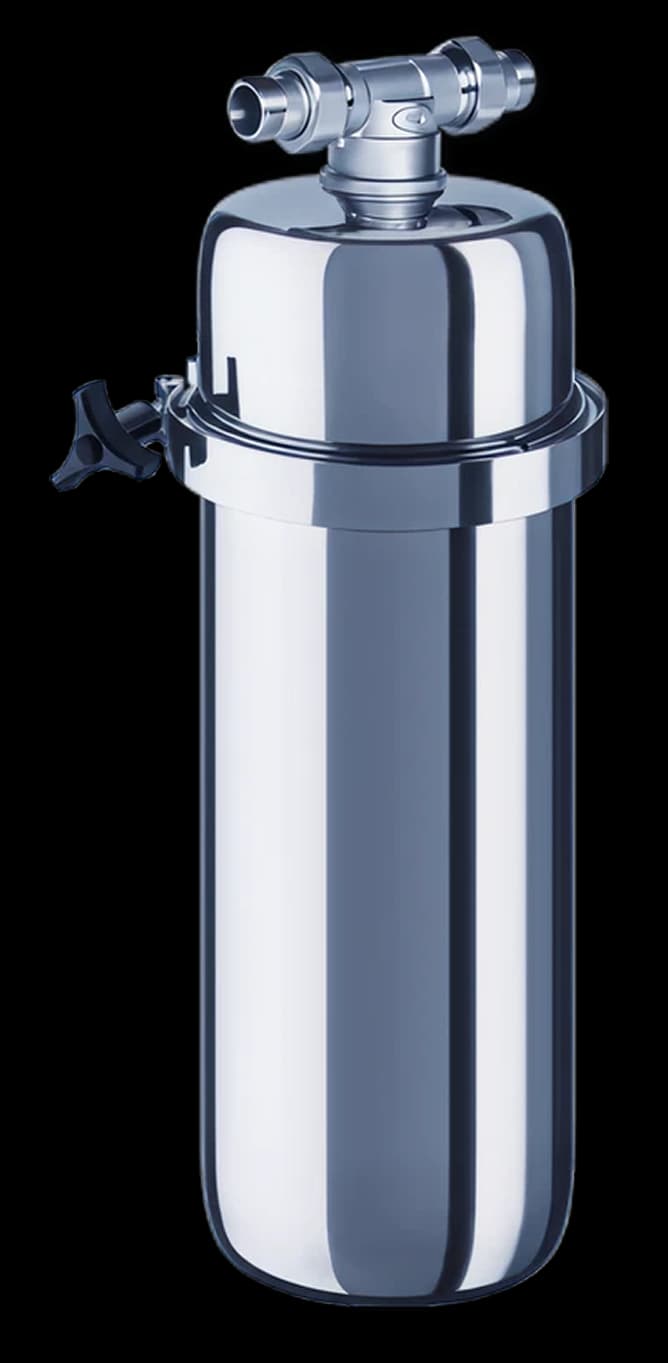
The lifespan question for whole-house water filters has two different answers depending on which part of the system you are asking about. The filter housing — the physical unit mounted on the pipe — is a long-lived piece of plumbing that, with correct installation and basic maintenance, lasts 10–20 years or more. The filter cartridge inside the housing lasts 12 months before requiring replacement.
Conflating these two lifespans is a common source of confusion. Understanding each separately helps you plan the ownership cost accurately and maintain the system correctly.
Housing Lifespan — 10 to 20 Years
The filter housing is a polypropylene or engineering plastic body with BSP threaded inlet and outlet connections and a threaded sump. The materials are rated for mains water pressure (typically 3–6 bar in European residential supply) and temperatures up to 35°C (the housing is on the cold supply only). Properly installed, the housing body itself does not wear out in any functionally meaningful sense.
The components that age are the O-ring (rubber seal between the sump and housing body) and the bypass valve. O-rings typically last 5–10 years before requiring replacement, depending on water chemistry (hard water accelerates mineral deposits on the seal surface) and how frequently the sump is removed for cartridge service. Bypass valves have a finite cycle life but rarely fail in residential use — the annual cartridge service involves only one or two bypass operations per year.
The Mam Nature housing is manufactured at the ISO 13485-certified Jona facility in Switzerland. Replacement O-rings are available from Mam Nature indefinitely for the product lifetime. This is the key practical consideration: choose a housing from a manufacturer with a durable spare-parts commitment, not a one-generation product.
Filter Cartridge Lifespan — 12 Months
The amyloid fine filter cartridge has a rated service life of 12 months for a household of four on municipal water. The rating is based on the media's adsorption capacity for PFAS, heavy metals, and chlorine byproducts at average European household water consumption (approximately 150 litres per person per day).
The 12-month figure is not arbitrary — it is the point at which the amyloid fibril binding sites are approximately saturated at average consumption. Replace at or before 12 months. There is no visual indicator of cartridge saturation — the water continues to look, smell, and taste the same from a saturated cartridge. A saturated cartridge provides no filtration; a very heavily overloaded carbon component may release previously captured contaminants.
For smaller households (1–2 people), the cartridge capacity may not be fully exhausted at 12 months, but annual replacement is still recommended. For well water or high-sediment supplies, the cartridge may saturate in less than 12 months — monitor flow rate as an indirect indicator of media loading.
What Reduces System Lifespan
High sediment in the incoming water without a particle pre-filter accelerates fine filter cartridge loading, reducing its effective life below 12 months. It can also introduce abrasive particles into the housing sump, affecting the O-ring surface over time. The particle pre-filter (included in Essential Plus, Complete Set, Complete Set Plus) protects the fine filter from this load.
Water hammer — pressure surges from rapidly closing valves or pump cycling — can stress filter housings and bypass valves over time. A pressure-reducing valve upstream (often already installed in European properties at the mains entry point) reduces peak pressure and protects the system. If your mains supply exceeds 6 bar, confirm that a pressure reducer is fitted before installing any POE filter.
Freezing is a significant risk. Filter housing materials and O-ring compounds are rated for a minimum of 4°C. An uninsulated garage or outbuilding installation in a cold climate can fall below this. Freezing water in the housing can crack the sump and destroy the O-ring. Install in a frost-protected location or insulate the housing and the pipe section.
The Water LIME and Dynamizer — Lifetime Components
The Water LIME anti-limescale device uses a permanent magnet with no moving parts and no consumables. It does not have a defined service life — the magnetic element is rated for the life of the installation. No replacement is required. Similarly, the Dynamizer module has no consumable components and no rated service interval.
In the Complete Set and Complete Set Plus, the only component requiring annual replacement is the amyloid fine filter cartridge. The Water LIME and Dynamizer modules are installed once and maintained for the life of the system.
Particle Pre-Filter — Long Life with Auto-Backwash
The particle pre-filter (in Essential Plus, Complete Set, Complete Set Plus) includes an automatic backwash mechanism that periodically reverses water flow to flush accumulated sediment from the filter mesh. This significantly extends the pre-filter service life compared to a static mesh — the mesh does not load up with sediment between services. The auto-backwash controller has a rated operational life of several years before the electronic timer requires attention; the mechanical valve components are similarly durable.
Inspection of the pre-filter housing and mesh every 2–3 years is recommended, with cleaning if visible sediment accumulation persists beyond what the auto-backwash addresses. In municipal water installations, this inspection is rarely needed.
When to Replace the Entire System vs Just the Cartridge
Replace the cartridge annually. Consider replacing the housing if: the housing body develops a crack (rare but possible from freezing or impact); the BSP threaded connections are cross-threaded or stripped; the bypass valve no longer operates smoothly and the valve assembly is not available as a service part. In practice, a well-maintained Mam Nature housing should serve the life of the property installation without replacement — the cartridge is the consumable, not the housing.
Annual cartridges shipped directly to your door — replace on time, every time.
Shop the Swiss Water CartridgeRelated Resources
Frequently Asked Questions
How do I know when the cartridge is exhausted?
You often cannot tell from the water itself — a saturated cartridge produces water that looks and tastes the same as a fresh one. The practical indicator is the calendar: replace at 12 months from the last service date for a household of four. If flow rate drops noticeably before 12 months, that is a sign the cartridge has loaded early — typically a sediment issue — and should be replaced.
Does the filter housing need to be replaced eventually?
In normal residential use, the housing itself rarely fails. The O-ring (5–10 year life) and bypass valve are the wear items. Replacement O-rings and bypass valve assemblies are available from Mam Nature. The housing body, once installed correctly, should outlast the property renovation cycle.
Is the Mam Nature cartridge interchangeable with other brands?
The housing uses a standard 10" cartridge form factor that physically accepts cartridges from other manufacturers. However, only the Mam Nature Swiss Water Cartridge contains the amyloid fibril media. Substituting a generic cartridge provides conventional activated carbon performance, not the validated PFAS removal rates of the ETH Zurich technology.
Can the filter system be relocated when moving house?
Yes. The system is installed with a bypass valve that can be closed to isolate the unit. Disconnecting the bypass valve from the pipe connections and removing the bracket from the wall allows the system to be reinstalled at a new property. The cartridge state at removal is the same as at installation of the next property — if within the annual service period, it continues to the next service date.