How to Size a Whole House Water Filter: Flow Rate, Household Size, and More
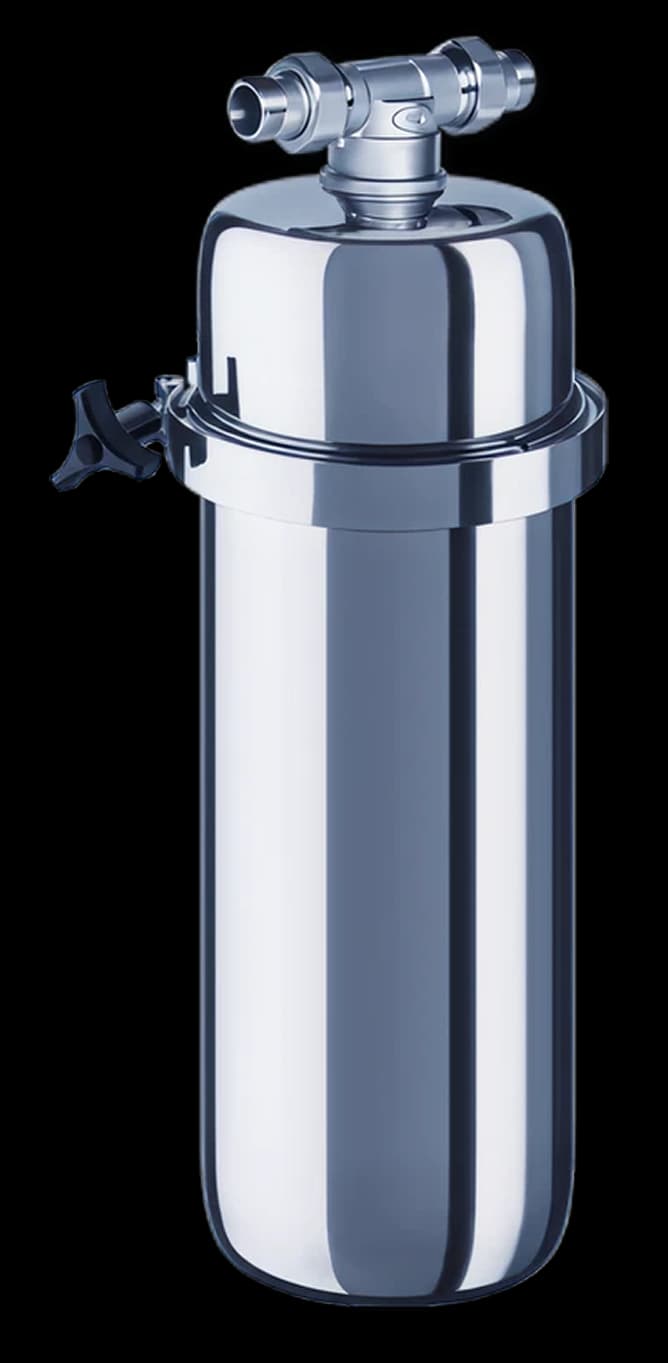
Sizing a whole-house water filter correctly determines whether the system performs as expected or disappoints. An undersized system creates pressure drops when multiple outlets run simultaneously. An oversized system wastes capital. A cartridge rated for the wrong water volume saturates too early or lasts far beyond its rated period — both of which cause problems.
This guide explains the four sizing variables that matter: flow rate, household water consumption, contaminant load (including hardness and sediment), and pipe size. Get these right before ordering.
Flow Rate — the Primary Sizing Variable
Flow rate is measured in litres per minute (L/min) or gallons per minute (GPM). It is the volume of water the filter can pass per unit time without causing a pressure drop. Every filter housing has a rated maximum flow rate — exceeding it means the cartridge creates a bottleneck and downstream pressure falls.
Typical residential peak demand: a shower runs at 8–12 L/min. A washing machine fills at 6–10 L/min. A dishwasher uses 3–6 L/min. Running two showers and a washing machine simultaneously peaks at 22–32 L/min. For a family of four in an average European home, a filter rated at 25 L/min handles normal peak demand without noticeable pressure loss.
The Mam Nature Essential, Essential Plus, Complete Set, and Complete Set Plus are all rated at 25 L/min — appropriate for families of 1–6 in standard European residential plumbing (22mm copper or 25mm MDPE). For larger properties with multiple bathrooms running simultaneously, or commercial applications, a higher flow rate housing is required.
Household Size and Cartridge Capacity
Cartridge capacity is measured in total litres of water treated before the media saturates. This determines how long one cartridge lasts before replacement is needed. The Mam Nature Swiss Water Cartridge is rated for 12 months for a household of four — which works out to approximately 500–600 litres per day consumption (4 people × 100–150 litres per person per day, consistent with European residential averages).
For a 1–2 person household, the same cartridge lasts longer than 12 months in practice, but annual replacement is still recommended regardless of household size — media can degrade or develop bacterial growth over extended periods even if capacity is not reached. For households above six people, or with higher than average water consumption (large gardens, smallholding, stock animals), cartridge consumption should be calculated based on actual water meter readings and the cartridge capacity figure from the specification sheet.
Pipe Diameter and Connection Type
Most European residential supply pipes are 22mm (copper) or 25mm (MDPE/plastic). These accept standard BSP threaded fittings (1" BSP for most whole-house housings) and standard compression or push-fit connectors. Before ordering, confirm your pipe diameter and material.
Older properties (pre-1970 in the UK and some parts of northern Europe) may have 15mm copper supply or lead pipe. A 15mm supply requires a 15-to-22mm reducer before the filter connection. Lead pipe should be replaced by a plumber before or during filter installation — this is an opportunity to address both issues in one visit. US residential properties use 3/4" or 1" NPT threading — confirm compatibility before purchasing a European-market system.
The Mam Nature systems ship with 1" BSP threaded inlet and outlet connections on the filter housing. Adapters for other thread standards are available from plumbing suppliers. The bypass valve assembly included with the system is pre-configured for 1" BSP and fits directly to standard European residential plumbing.
Sediment and Turbidity Load
Municipal water in most European cities is pre-filtered by the utility before it reaches the mains. Sediment load is low — typically below 1 NTU (nephelometric turbidity unit). For municipal water, a sediment pre-filter is a precaution rather than a necessity, and the amyloid fine filter alone provides adequate protection.
Well water is different. Water from a private borehole or surface well can carry significant sediment: iron particles, manganese, clay fines, and organic matter. High sediment load saturates the fine filter cartridge quickly and dramatically reduces cartridge life. For well water installations, a particle pre-filter is essential — not optional. The Essential Plus, Complete Set, and Complete Set Plus all include an auto-backwash particle pre-filter rated for sediment removal above 200 microns, which protects the downstream fine filter from premature saturation.
Water Hardness and Anti-Limescale Sizing
Hardness does not affect filter cartridge sizing directly — the amyloid fine filter allows calcium and magnesium to pass through (they are not contaminants it targets). However, if you are adding an anti-limescale component, the Water LIME is designed for the European hard-water range and does not require sizing adjustment — it is a fixed magnetic field device, not a media-based system. It works at all residential flow rates up to 25 L/min.
If you are considering a TAC system instead, TAC does require sizing to your flow rate — undersized TAC media (insufficient contact time with the crystalisation beads) produces incomplete treatment. Check the TAC supplier's sizing table for their specific media flow-rate requirements before purchasing.
How to Choose the Right Mam Nature System
Essential (€1,090): amyloid fine filter only — correct for municipal water, low sediment, 1–6 persons, where the primary concern is one of the named PFAS, metals or free residual chlorine covered by the public performance report. No particle pre-filter, no anti-limescale.
Essential Plus (€1,360): amyloid fine filter + auto-backwash particle pre-filter — correct for well water installations, rural properties, or municipal water with visible sediment. Extends fine filter cartridge life significantly in high-sediment applications.
Complete Set (€2,998): amyloid fine filter + particle pre-filter + Water LIME anti- limescale device — correct for hard water areas (above 200 mg/L CaCO₃) where both PFAS removal and scale prevention are priorities.
Complete Set Plus (€3,598): adds the Dynamizer revitalisation module to the Complete Set. Correct for households that want the complete Mam Nature system including revitalisation, or where the Dynamizer's additional structured water output is desired.
Not sure which system is right for your household? The product pages include sizing guidance for each Mam Nature configuration.
View All SystemsRelated Resources
Frequently Asked Questions
How do I measure my home's water flow rate?
Use a calibrated bucket and a stopwatch. Place the bucket under an outdoor tap or bath tap (which typically has the highest flow rate in the house). Open fully and time how many seconds to fill 10 litres. Divide 600 by the number of seconds: result is litres per minute. Repeat at the kitchen tap for comparison. The highest reading is your peak single-tap flow; household peak demand is the sum of typical simultaneous use.
Does the filter affect water pressure throughout the house?
A correctly sized, clean cartridge should show no noticeable pressure reduction. If you notice a pressure drop, check two things: first, whether the bypass valve is fully open (partially closed is a common post-install oversight); second, whether the cartridge is approaching saturation and needs early replacement. A flow meter on the bypass can help track actual flow rate over time.
Can one filter system serve a large house with multiple bathrooms?
A system rated at 25 L/min is appropriate for most single-family homes with up to 3 bathrooms running simultaneously. Very large properties (5+ bathrooms, commercial premises) may require a higher-flow-rate housing or parallel filter banks. Contact Mam Nature for assessment of large-property applications.
Does household water consumption vary by country?
Yes. Swiss households average approximately 160 litres per person per day. German households average approximately 125 litres per person per day. UK households average approximately 145 litres per person per day. US households average approximately 300+ litres per person per day. Cartridge life calculations should use the actual consumption figure for your country and household, not generic averages.