Best Whole House Water Filter 2026: How to Choose Based on What Your Water Actually Contains
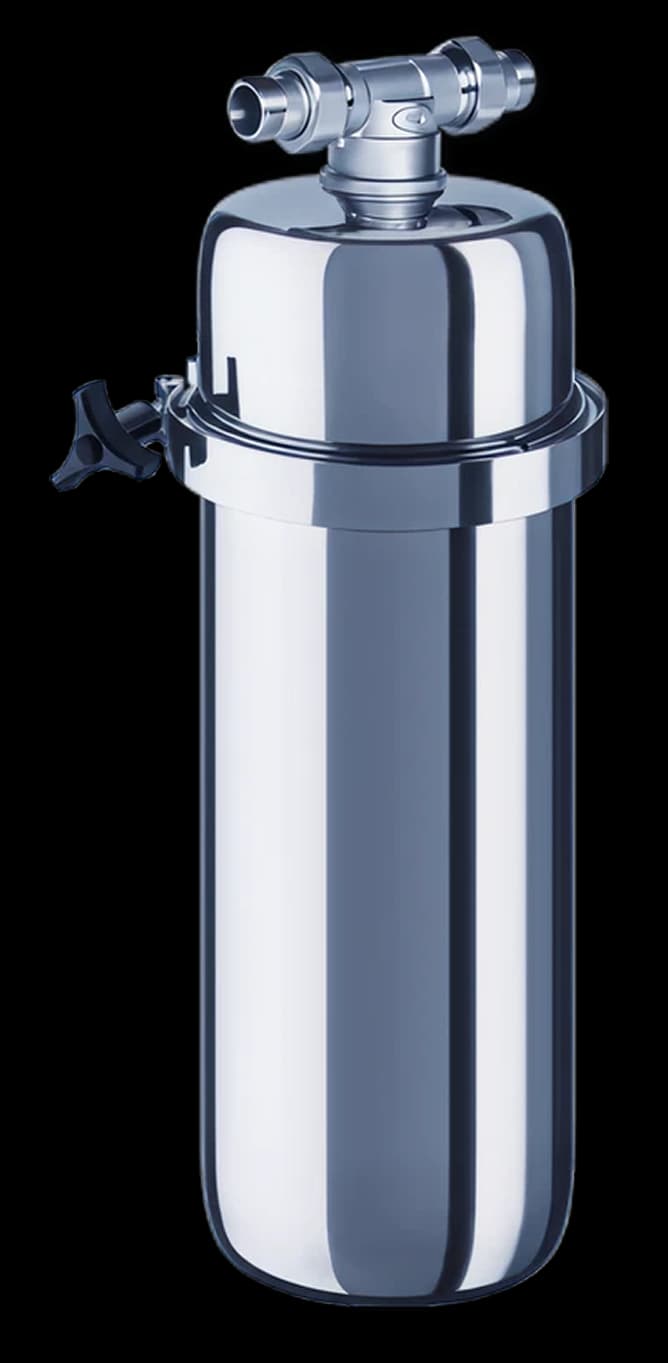
"Best whole house water filter" is one of the most searched water quality terms globally, yet most buyers make their decision without knowing what their water actually contains. The filter that performs best against contaminants like PFAS is different from the one that performs best against hardness. The right choice depends entirely on your specific contaminant profile.
This guide explains the filter types available in 2026, what each removes and what it misses, how to evaluate certifications and testing claims, and which Mam Nature system matches each common household scenario.
One rule governs everything in this guide: only buy a filter whose performance claims are backed by independent, single-pass laboratory testing from a named institution. Marketing copy is not evidence. Lab data is.
Start Here — What Is Actually in Your Water
Municipal water in Europe and North America is treated, in most cases, before it reaches your tap. That treatment addresses microbiological safety (bacteria, viruses) but does not remove all dissolved contaminants. What remains depends on your water source, your local infrastructure, and your region's industrial history.
The most common categories of concern in 2026 are: PFAS (per- and polyfluoroalkyl substances — present at detectable levels in an estimated 45% of US tap water samples according to USGS 2023 data, and in significant fractions of European supplies near industrial zones, airports, and agricultural land); chlorine and disinfection byproducts (trihalomethanes, haloacetic acids — universal in chlorinated municipal systems); heavy metals including lead (from ageing plumbing), copper, and cadmium; nitrates (agriculture runoff — elevated in rural and agricultural regions); microplastics; and pharmaceutical residues.
The single most useful thing you can do before buying any filter is obtain your municipality's most recent water quality report and, for PFAS specifically, send a water sample to a certified laboratory. A 30-compound PFAS panel from labs such as ALS Global or Eurofins costs €150–400 and gives you actual inlet concentrations — the numbers your filter needs to work against.
The Four Main Filter Technologies Used in Whole-House Systems
Activated carbon is the most widely used filter media in residential systems worldwide. Depending on the medium, contact time and certification, it can reduce free chlorine and some other compounds; chloramine performance must be checked for the specific product. Its limitations are significant: standard activated carbon provides limited removal of PFAS (particularly short-chain variants), does not reliably remove heavy metals without additional modification, and offers no protection against nitrates or hardness. Granular activated carbon (GAC) performs differently from carbon block and from catalytic carbon — these are distinct products with different performance profiles.
Mechanical or sediment filtration uses a physical barrier — typically a spun-polypropylene or pleated polyester membrane — to remove particles above a defined size threshold (usually 1–100 microns). It removes sediment, rust, sand, silt, and some microplastics. It does not remove dissolved contaminants of any kind. It is standard practice to place a sediment pre-filter upstream of any adsorption or membrane system to protect the primary media from particle charge.
Adsorption filtration uses a solid medium with an enormous surface area to bind specific dissolved molecules as water passes through. Unlike activated carbon, engineered adsorption media can be selective. For the Mam Nature cartridge, the public report records controlled single-pass results for seven named PFAS and named metals while calcium and magnesium remain in the outlet measurements. PFAS reduction ranged from greater than 96% to greater than 98.5%, depending on the compound and detection limit. Microplastics were not measured in that report.
Reverse osmosis is a membrane-based technology that forces water through a semi-permeable membrane, rejecting virtually all dissolved solids. It achieves high contaminant removal rates but also removes beneficial minerals, produces 3–4 litres of brine waste for every litre of filtered water, and requires pressure boosting in many installations. In a whole-house configuration, RO is prohibitively expensive to run (high water waste) and strips water of the minerals needed for taste and appliance compatibility. It is best suited to point-of-use drinking applications where extremely high TDS requires reduction.
How to Read Certification Claims
Certification claims in the water filter industry range from meaningless to highly meaningful. The key questions are: who tested it, what exactly was tested, under what conditions, and were results measured single-pass or with recirculation?
NSF International (US) is the most widely recognised third-party testing body for residential water treatment in North America. NSF/ANSI Standard 58 covers reverse osmosis; Standard 53 covers health-effects reduction claims for carbon-based filters. NSF testing is conducted under controlled, standardised conditions and covers specified contaminant lists. Note that NSF does not currently have a standard specifically for PFAS removal at the sub-4-ng/L level, though this is expected to change following the 2024 EPA MCL.
ETH Zurich University laboratory validation (the basis of Mam Nature's performance claims) is independent academic research conducted under peer-review conditions. The Bolisetty et al. study published in Chemical Society Reviews (Royal Society of Chemistry, 2020) validated amyloid protein-fibre filtration against radioactive compounds, heavy metals, dyes, and PFAS. Mam Nature's product-specific laboratory performance reports extend this research to real-world household conditions with documented inlet/outlet measurements.
ISO 13485 is a quality management system standard for manufacturers of medical devices, not a contaminant-removal validation. It means the manufacturing process meets medical-grade quality controls — relevant for confidence in manufacturing consistency, but not a substitute for contaminant-removal data.
Which System Fits Which Situation
For a household concerned about compounds named in the public report, the Mam Nature Essential (€1,090) places the tested cartridge at the point of entry. The report covers seven PFAS, named metals, free residual chlorine and other specified analytes under controlled single-pass conditions. It does not test every contaminant or microplastics.
For households with known sediment issues — well water, older plumbing with visible rust deposits, turbid supply — the Essential Plus (€1,360) adds a particle pre-filter upstream of the amyloid cartridge. The pre-filter removes sediment before it can foul the cartridge, extending service life and protecting the adsorption media.
For households in hard-water regions (for example Switzerland, southern Germany, Belgium, northern Italy, Netherlands) where limescale is a material concern for boilers, dishwashers, and combi heating systems, the Complete Set (€2,998) combines the Essential Plus with the Water LIME anti-limescale device and the Dynamizer. The Water LIME uses a targeted magnetic field to convert calcium carbonate crystals from the calcite form (which adheres to surfaces and builds scale) to aragonite (which stays suspended and flushes out). No salt, no electricity, no chemicals.
For the maximum-protection household — new build, family with young children, premium home, or region with both PFAS and hard water concerns — the Complete Set Plus (€3,598) combines all components: particle pre-filter, 2 × Water FINE FILTER (with Swiss Water Cartridge), Water LIME, and Dynamizer. This is the system for buyers who want one decision and no compromises.
What No Filter Can Do
Setting honest expectations is part of a credible buying guide. No residential water filter removes microbiological contaminants — bacteria, viruses, protozoa — to a level that makes untreated well water safe to drink without prior disinfection. If your water source has microbiological risk, a UV disinfection unit or verified disinfection step is required before filtration.
No filter removes dissolved gases such as radon unless it incorporates specific aeration technology. Radon in well water requires specialist treatment.
No filter removes nitrates at high concentrations without ion exchange or reverse osmosis. The amyloid cartridge provides partial reduction of nitrates as a secondary effect, but is not rated as a primary nitrate removal technology. If your water report shows nitrates above 50 mg/L, consult a specialist.
Total Cost of Ownership Over Five Years
The correct way to compare whole-house systems is total cost of ownership, not purchase price. The purchase price of the filter is a one-time cost. Ongoing costs — consumables, maintenance, wasted water — repeat annually.
A Mam Nature Essential system costs €1,090 at purchase, plus €240 per year for the replacement cartridge. Over five years, total cost is €1,090 + (5 × €240) = €2,290. The housing carries a 10-year warranty, so at year five the system is halfway through its guaranteed service life.
Compare this to bottled water for a family of four. At €0.70/litre (Evian in France), 8 litres per day, 365 days: €2,044 per year, or €10,220 over five years — for drinking water only, not showering or cooking water. The Mam Nature system pays for itself in 13–18 months versus premium bottled water consumption and continues providing whole-house filtration for every tap thereafter.
Find the right system for your household — from entry POE protection to the complete hard-water and PFAS solution.
Compare All SystemsRelated Resources
Frequently Asked Questions
How long does a whole house water filter last?
The filter housing (stainless steel or polymer) is designed for 10+ years with proper installation. The filter cartridge — the replaceable media inside — lasts approximately 12 months for an average household of four on a municipal supply. Well water or high-turbidity supply may require more frequent replacement.
Do whole house water filters reduce water pressure?
A correctly sized system causes negligible pressure reduction. Systems rated at 1,800 L/h or above handle peak household demand without creating a pressure drop.
What maintenance does a whole house water filter require?
For an adsorption-based system like the Mam Nature range, maintenance consists of one annual cartridge replacement. The procedure takes approximately 10 minutes and requires no tools. No backwashing, no salt refilling, no electrical reset.
Can I install a whole house water filter myself?
Yes, if you have the skills of a professional plumber. The installation requires cutting into the main pipe, fitting a bypass valve, and connecting the housing using standard BSP fittings. Mam Nature systems ship with a drill template, step-by-step installation guide, and all connection hardware. However, due to the usual conditions of your water damage insurance, we recommend that the installation be executed by a professional plumber.
Does a whole house filter work with a combi boiler?
Yes. POE filters connect on the cold mains supply, upstream of the boiler. The filtered water feeds both the cold outlets and the boiler, which reduces scale formation in the heat exchanger — particularly relevant for Complete Set and Complete Set Plus configurations that include the Water LIME anti-limescale device.
Sources & References
- US Geological Survey (2023). "PFAS in US Tap Water: National Reconnaissance Study."
- Bolisetty, S., Peydayesh, M., Mezzenga, R. (2020). Sustainable technologies for water purification from heavy metals. Chemical Society Reviews 49, 463–487.
- US EPA (2024). PFAS National Primary Drinking Water Regulation.
- NSF International. NSF/ANSI 53: Drinking Water Treatment Units — Health Effects.
- Mam Nature Swiss AG — ETH Zurich University Filtration Performance Report (2024).