Best Whole House Water Filter for Well Water — What You Actually Need
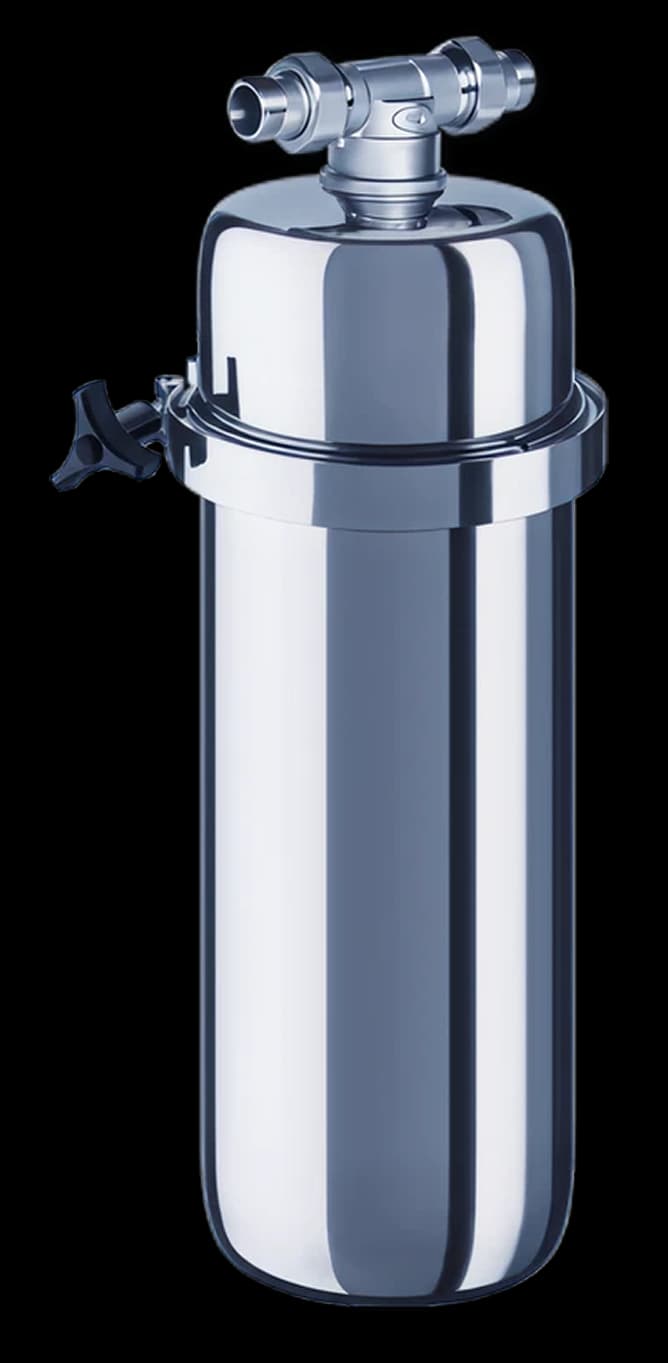
Choosing a whole-house filter for private well water is different from choosing one for municipal supply. Municipal water arrives pre-treated — disinfected, pH-adjusted, and monitored for hundreds of contaminants. Well water arrives as-is from the aquifer. What it contains depends entirely on the geology, land use, and history of the specific location.
There is no single "best" filter for all well water. The correct system is determined by what your test results show is in your water. This guide maps the most common well water contaminant profiles to the appropriate treatment approach.
Start With a Water Test — Every Time
Before specifying any well water treatment system, test the water. A treatment system specified without knowing the water chemistry may address some problems while missing others — or may be more expensive than the problem requires.
The minimum test panel for a private well should cover: total coliform and E. coli, pH, hardness (as mg/L CaCO₃ or °dH), iron, manganese, nitrate, turbidity (NTU), and total dissolved solids (TDS). If the well is near an airport, military base, industrial site, or agricultural land with biosolid application, add a PFAS panel. Total cost of a comprehensive test: €150–400 from a certified laboratory.
Well Water Profile 1 — Moderate Sediment and PFAS, No Bacteria
This is the most common profile for wells in rural Europe — moderate sediment (turbidity 1–10 NTU), PFAS of uncertain status, no confirmed bacterial contamination, hardness 150–350 mg/L. The appropriate Mam Nature system is the Complete Set (€2,998): auto-backwash particle pre-filter for sediment, Water LIME for limescale, and amyloid fine filter for PFAS, heavy metals, and chlorine byproducts.
The auto-backwash particle pre-filter is critical for well water — without it, the fine filter cartridge loads with sediment and may saturate in weeks rather than months. The pre-filter extends fine filter cartridge life significantly in high- sediment applications. The backwash cycle frequency should be increased from the municipal default (twice per year) to monthly or quarterly for well water with visible sediment.
Well Water Profile 2 — High Iron or Manganese
Wells with iron above 1 mg/L or manganese above 0.2 mg/L require a dedicated iron/manganese treatment stage upstream of the main filter. The standard media for this application is greensand (manganese greensand) or birm, which oxidise dissolved iron and manganese and capture the resulting particles.
The Mam Nature particle pre-filter handles general turbidity down to 200 microns but is not designed as a high-iron treatment stage. For high-iron wells, the recommended configuration is: dedicated iron/manganese filter → Mam Nature Complete Set (particle pre-filter + Water LIME + amyloid fine filter). The iron/manganese filter must be sized and maintained separately.
Well Water Profile 3 — Bacterial Contamination Confirmed
A positive coliform or E. coli test result requires disinfection. UV (ultraviolet) disinfection is the first-line treatment — a UV unit installed inline destroys bacteria and viruses through UV exposure without adding chemicals, altering taste, or affecting water chemistry downstream.
The amyloid fine filter does not disinfect and should not be relied on for bacterial reduction. Install UV upstream of the Mam Nature system. The complete configuration for a bacterially contaminated well is: UV disinfection → auto-backwash particle pre-filter → amyloid fine filter (Complete Set or Essential Plus). The UV unit requires annual lamp replacement.
UV requires clear water to function — turbid water (above 1 NTU) absorbs UV radiation and reduces disinfection efficiency. If the well has both turbidity and bacterial contamination, add a sediment pre-filter before the UV to clarify the water before UV exposure.
Well Water Profile 4 — Nitrates Above Guideline Value
The EU guideline for nitrate in drinking water is 50 mg/L (as NO₃). Wells near intensive agricultural areas frequently exceed this. Infants under 6 months should not be given water with nitrates above 50 mg/L.
Nitrate removal requires ion-exchange anion resin or reverse osmosis. The Mam Nature amyloid fine filter does not remove nitrates — it is selective for PFAS, heavy metals, and chlorine byproducts, not inorganic anions. A nitrate-specific ion exchange unit should be added to the treatment train for wells with confirmed nitrate exceedance.
Well Water Profile 5 — PFAS Detected Above Guidelines
The EU sum-of-PFAS guideline for drinking water is 0.1 µg/L (sum of 20 PFAS). If a well test shows PFAS above this level, treatment is necessary. The amyloid fine filter, validated by ETH Zurich for >96% single-pass PFAS removal, is the core Mam Nature treatment for PFAS.
For very high PFAS concentrations (above 5 µg/L), a combination approach is more effective: PFAS-selective ion exchange resin (such as single-use PFAS-IX media) as a pre-treatment stage to reduce PFAS from very high to moderate concentrations, followed by the amyloid fine filter for residual removal. This two-stage approach achieves deeper overall reduction and protects the amyloid cartridge capacity.
How the Mam Nature Complete Set Performs for Well Water
The Complete Set is the most capable Mam Nature configuration for private well water in the common profile of moderate sediment + PFAS + hardness. The auto-backwash particle pre-filter runs automatically to flush sediment without manual intervention — important for rural properties where frequent manual maintenance may not be practical. The Water LIME addresses scale without salt or chemicals. The amyloid fine filter provides ETH Zurich-validated PFAS, heavy metal, and chlorine byproduct removal.
The system does not address bacteria (UV required), high iron/manganese (dedicated stage required), or nitrates (ion exchange or RO required). For wells with these additional challenges, the Complete Set integrates into a multi-stage treatment train rather than being a standalone solution.
The Complete Set — particle pre-filter, Water LIME, and amyloid filter — designed for rural and well water applications.
Explore the Complete SetRelated Resources
Frequently Asked Questions
Can I use the Essential (no particle pre-filter) for well water?
Not recommended for well water with any visible turbidity or sediment. Without the particle pre-filter, the fine filter cartridge takes the full sediment load and will saturate rapidly — potentially within weeks for turbid well water. The Essential Plus or Complete Set (which include the particle pre-filter) are the appropriate starting point for well water applications.
How often do I need to replace the cartridge for well water?
More frequently than the 12-month municipal water rating. Well water sediment and higher organic matter loads accelerate cartridge saturation. Monitor flow rate — a noticeable drop before the 12-month date means the cartridge needs early replacement. Many well water installations see 6–9 month cartridge life rather than 12 months.
Does the filter remove all bacteria from well water?
No. The amyloid fine filter is not designed as a disinfection device. For bacterial contamination, UV disinfection installed upstream is the appropriate treatment. The fine filter can physically capture some bacteria-sized particles through mechanical filtration, but this is not its primary mechanism and should not be relied on for bacterial safety.
Is the Water LIME effective for very hard well water?
The Water LIME is designed for the European residential hard-water range, typically 150–400 mg/L CaCO₃. For very hard well water above 450 mg/L, an ion-exchange softener may provide more reliable scale prevention. The Water LIME can still reduce scale adhesion at higher hardness levels but may not provide complete protection.
What is the recommended filter sequence for a complex well water treatment?
For a well with multiple issues: iron/manganese filter → UV disinfection → particle pre-filter (auto-backwash) → Water LIME → amyloid fine filter → [optional: Dynamizer]. Sediment and large particulates first; disinfection second; finer particulates and mineral conditioning third; PFAS and heavy metals last. This sequence protects downstream stages from loadings they are not designed to handle.
Sources & References
- World Health Organization (2017). Guidelines for Drinking-water Quality, 4th edition.
- European Environment Agency (2021). Emerging contaminants in European groundwater.
- Bolisetty, S., Peydayesh, M., Mezzenga, R. (2020). Sustainable technologies for water purification from heavy metals. Chemical Society Reviews 49, 463–487.
- US EPA (2022). Private drinking water wells — testing guidance.