Well Water Filtration Guide: Contaminants, Testing, and Treatment Options
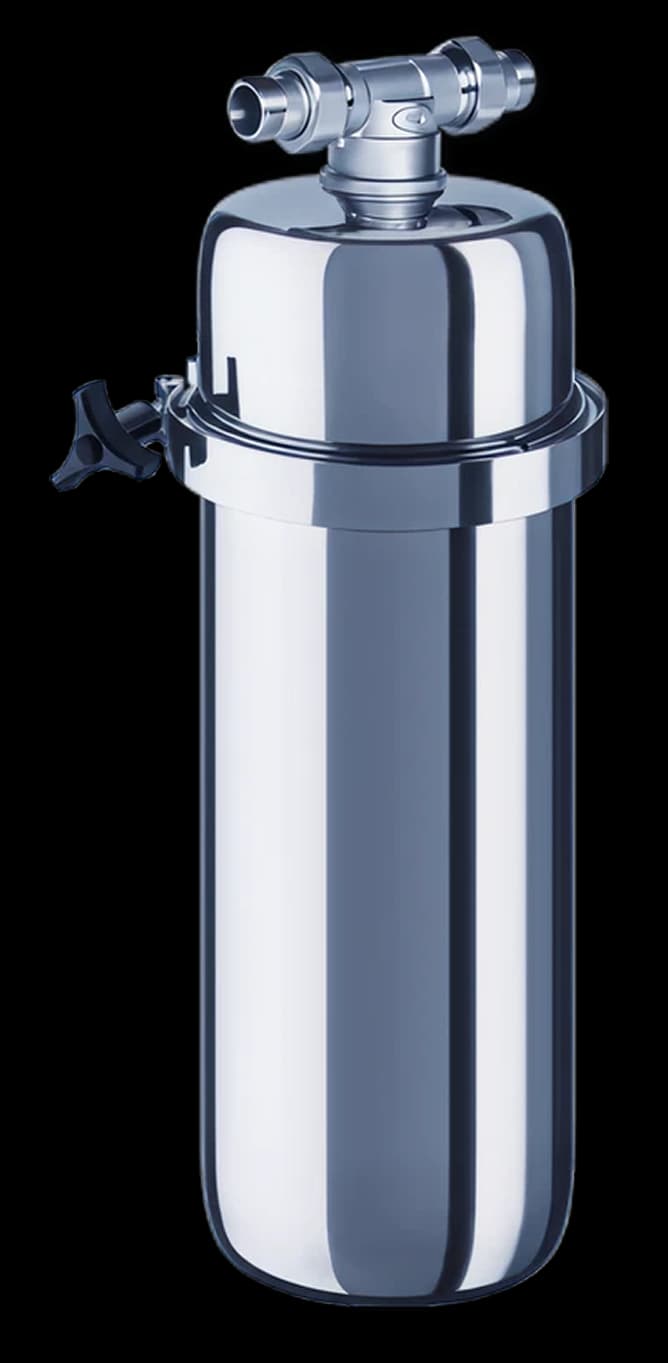
Private well water is untreated by any utility. Unlike municipal supply, it receives no disinfection, no pH adjustment, and no regulatory monitoring. What comes out of the well is what is in the ground — which can include naturally occurring minerals, bacteria, nitrates from agricultural run-off, and, increasingly, PFAS from industrial contamination in the catchment area.
This guide covers the contaminants most commonly found in private well water in Europe and North America, how to test for them, and which treatment approaches address each. It is intended for households on private well supply who want to understand what is in their water before choosing a treatment system.
Why Well Water Is Different From Municipal Supply
Municipal water utilities are required to test for hundreds of contaminants on defined schedules and publish annual quality reports. The results are audited and, if a parameter exceeds its guideline value, the utility must act. Private wells operate outside this system entirely. There is no legal requirement in most European countries for private well owners to test their water, and no authority that monitors private well quality unless a public health concern is reported.
The absence of monitoring does not mean well water is unsafe — it means the homeowner has no default information about what the water contains. Testing is the starting point for any well water treatment decision.
The Most Common Well Water Contaminants
Iron and manganese are the most widespread naturally occurring contaminants in European well water. Iron above approximately 0.2 mg/L causes orange-brown staining on sinks, bath, and laundry. Manganese above 0.05 mg/L causes black deposits and a metallic taste. Both are more of an aesthetic and appliance problem than a direct health hazard at the concentrations typical of most private wells, though chronic high manganese exposure has been linked to neurological effects at very high concentrations.
Hardness is extremely variable in well water and depends entirely on the geology. Wells in limestone and chalk areas (much of southern England, Belgium, parts of Germany and Switzerland) produce very hard water. Wells in granite or sandstone areas (Scotland, Scandinavia, many Alpine regions) tend to produce soft water. Hardness above 200 mg/L CaCO₃ causes the same appliance and plumbing problems described for municipal hard water, but at potentially higher concentrations.
Nitrates enter groundwater primarily from agricultural fertilisers and septic systems. The EU drinking water standard for nitrate is 50 mg/L (as NO₃). Wells near intensive agricultural land frequently exceed this in the Netherlands, Belgium, parts of Germany, and Denmark. Nitrates above the guideline value are a significant risk for infants under six months (methaemoglobinaemia — "blue baby syndrome") and require treatment for drinking water use.
Bacteria — particularly coliform bacteria (including E. coli) — can enter wells from nearby septic systems, surface run-off entering the well casing, or flooding. A positive coliform result requires urgent remediation. Disinfection (UV treatment, chlorination) and physical protection of the well head are the standard responses.
PFAS in Well Water
PFAS contamination of private wells is documented in multiple European countries and is a growing concern. The most common sources near private wells are: military airbases and airports where PFAS-containing firefighting foam (AFFF) was used; industrial facilities that manufactured or used PFAS; and agricultural land where PFAS-containing biosolids (sewage sludge) have been applied as fertiliser.
Several large-scale surveys of private wells in areas near these sources have found PFAS concentrations significantly above the EU sum-of-PFAS guideline of 0.1 µg/L. Unlike municipal water, there is no utility that monitors private wells for PFAS — the well owner must commission a test independently. Given the health implications of PFAS exposure (see the articles on PFAS health risks on this site), testing is strongly recommended for wells near any of these potential source types.
Well Water Testing — What to Test and Where
A basic well water test should include: total coliform and E. coli (bacteria); pH and hardness; iron and manganese; nitrate; and turbidity (sediment). These cover the most common private well issues and are typically available from certified water testing laboratories for €80–200.
If your well is near an airport, military base, industrial facility, or intensive agricultural area, add a PFAS panel to the test. PFAS analysis requires a specialist laboratory and adds to the cost (€150–400 for a multi-compound PFAS panel), but is the only way to confirm whether PFAS contamination is present at your specific well.
Cantonal and regional health authorities in Switzerland (SUVA), Germany (DVGW-associated labs), and the UK (UKAS-accredited labs) can recommend certified testing laboratories. Online search for "accredited drinking water testing laboratory" plus your region is a starting point. The test sample is typically self-collected (the lab sends a sterile container) and mailed to the laboratory.
Treatment Options for Well Water
Sediment (iron, manganese, turbidity): a multi-media sediment filter or iron/manganese- specific filter (greensand, birm media) upstream of the main filtration stage. The Mam Nature Essential Plus particle pre-filter handles general turbidity and large particulates but is not specifically designed as a high-iron/manganese filter — a dedicated iron/manganese stage should be added upstream for wells with iron above 1 mg/L or manganese above 0.2 mg/L.
Bacteria: UV (ultraviolet) disinfection is the most effective no-chemical method for bacterial inactivation in well water. A UV unit is installed inline and destroys bacteria and viruses through UV exposure without adding chemicals or affecting water chemistry. For wells with confirmed bacterial contamination, UV is non-optional.
Nitrates: ion-exchange anion resin is the standard treatment for nitrate reduction. Reverse osmosis also removes nitrates effectively. The Mam Nature amyloid fine filter is not designed as a nitrate reduction filter — it targets PFAS, heavy metals, and chlorine byproducts.
PFAS: the amyloid fine filter (ETH Zurich-validated >96% PFAS removal) is the recommended Mam Nature treatment for well water PFAS. For very high PFAS wells (significantly above the EU guideline), a combination of pre-treatment (PFAS-selective ion exchange resin) followed by amyloid filtration provides the deepest removal.
Hardness: the Water LIME anti-limescale device addresses hardness-related scale adhesion (the Complete Set configuration). For very hard well water above 450 mg/L, consider ion-exchange softening if scale is severe, combined with the amyloid filter for PFAS and other contaminants.
The Recommended Configuration for Well Water
For a well with low-to-moderate sediment, no bacterial contamination confirmed, moderate hardness (150–350 mg/L), and PFAS present or unknown: the Complete Set (particle pre-filter + Water LIME + amyloid fine filter) covers sediment, scale, and PFAS in a single installation.
For a well with known bacterial contamination, add a UV disinfection unit upstream of the filter system. UV does not interact with or degrade the amyloid media. Install UV before the Mam Nature housing.
For a well with high iron or manganese, add a dedicated iron/manganese filter stage upstream of the particle pre-filter. The sequence for a complex well water treatment system is: iron/manganese filter → UV → particle pre-filter → Water LIME → amyloid fine filter.
The Complete Set addresses well water's most common problems — sediment, scale, and PFAS — in a single installation.
Explore the Complete SetRelated Resources
Frequently Asked Questions
Do I need to test my well water every year?
Annual testing for bacteria, nitrate, and turbidity is recommended as a minimum for any private well. Hardness, iron, manganese, and PFAS can be tested less frequently (every 3–5 years) unless you notice changes in water quality. Test after any flooding event, nearby land use changes, or if you notice a change in colour, taste, or odour.
Is well water safe to drink untreated?
This depends entirely on your specific well's geology, land use in the catchment area, and well construction. Some wells produce consistently safe water; others have persistent contamination issues. Without testing, you cannot know. Do not assume well water is safe based on appearance or taste — many contaminants (nitrates, PFAS, dissolved metals) are colourless and tasteless at concentrations that pose health risks.
Does the Mam Nature filter work with well water?
Yes, with correct pre-treatment. The amyloid fine filter is effective at removing PFAS, heavy metals, and chlorine byproducts from well water. Well water with high sediment or iron requires the particle pre-filter (Essential Plus or Complete Set) to protect the fine filter cartridge from premature loading. Well water with bacterial contamination requires a UV disinfection stage upstream.
How often do I need to replace the cartridge for well water?
More frequently than for municipal water in most cases. Well water typically carries higher levels of sediment, organic matter, and dissolved minerals than municipal supply, which accelerates cartridge loading. Monitor flow rate — a noticeable drop indicates the cartridge is saturated and needs early replacement. Annual replacement is the minimum; high-sediment well water may require 6-monthly replacement.
Can PFAS from well water be completely removed?
Complete removal is not guaranteed by any technology — but >96% reduction in a single pass (as validated by ETH Zurich for the amyloid filter) brings concentrations from typical well contamination levels (0.1–1 µg/L) down to or below detection thresholds in most cases. For very high PFAS concentrations (above 5 µg/L), a combination of PFAS-selective ion exchange pre-treatment followed by amyloid filtration provides deeper reduction.
Sources & References
- World Health Organization (2017). Guidelines for Drinking-water Quality, 4th edition incorporating the 1st addendum.
- European Environment Agency (2021). PFAS contamination of soil, water, and biota.
- DVGW (Germany). Trinkwasserhygiene — Hausinstallation und Eigenwasserversorgung.
- UK Drinking Water Inspectorate. Private water supplies — regulation, risk assessment and testing.
- Bolisetty, S., Peydayesh, M., Mezzenga, R. (2020). Sustainable technologies for water purification from heavy metals. Chemical Society Reviews 49, 463–487.