

Whole House Water Filter Installation Checklist: Everything You Need Before, During, and After
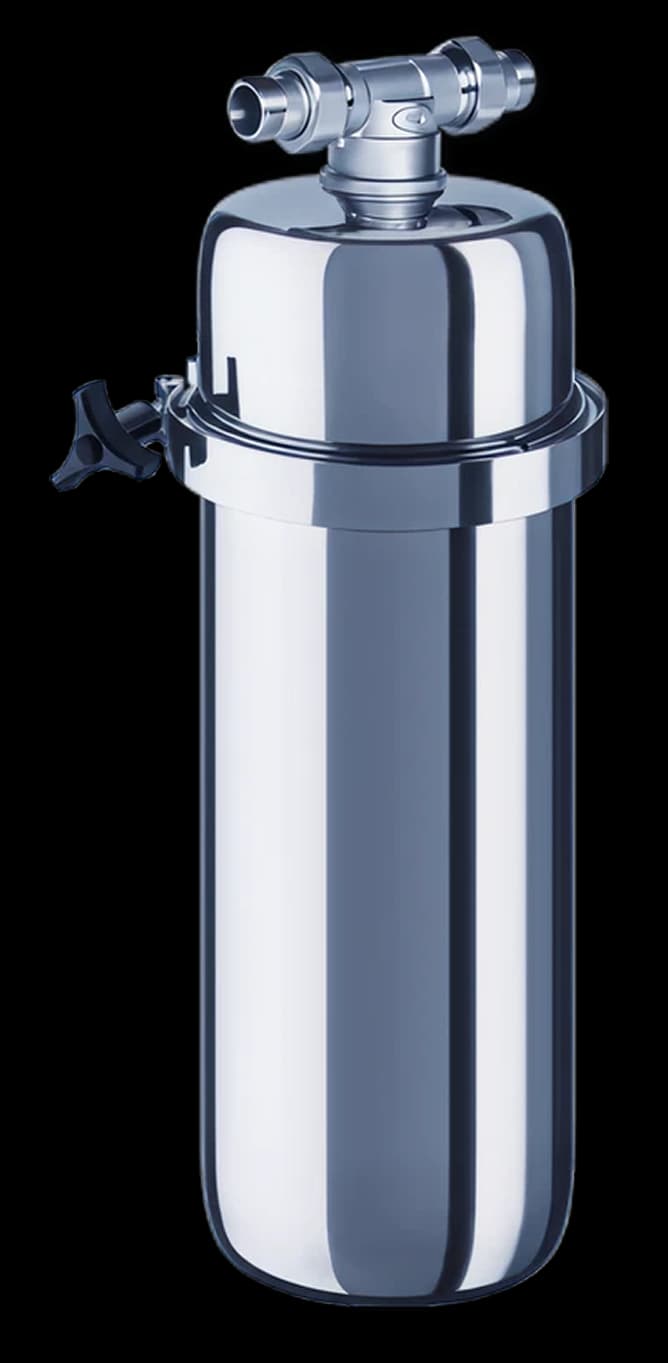
A quick-reference guide for installing a whole-house point-of-entry water filter. We recommend a qualified plumber make the mains connection — keep this checklist to hand on installation day, or give it to your plumber, so nothing is missed. It works alongside the full installation guide.
The list is organised into four phases: preparation (before the system arrives), installation day, first use, and the annual maintenance routine. Print it or save it to your phone.
Phase 1 — Preparation (Before Installation Day)
Confirm your pipe material and diameter. Standard European residential supply: 22mm copper or 25mm MDPE. US: 1" NPT. Check before ordering fittings. If the pipe is lead or iron, plan for professional installation. Locate the main stop cock and confirm it shuts off supply completely. If it is stiff or partially seized, have it serviced before installation day — a leaking stop cock makes filter installation impossible. Measure clearance at the installation location: at least 30cm below the housing for cartridge removal; 15cm either side for fittings access. Verify the location is frost-free (minimum 4°C in winter).
Tools to gather: rotary pipe cutter, deburring tool, adjustable spanner, cordless drill, spirit level, bucket and towels, PTFE thread tape, pipe clips. Fittings to purchase: compression or push-fit connectors sized for your pipe (not included with the system). Check the system box includes: housing with bracket, bypass valve assembly, cartridge, O-rings, drill template, installation guide. Do not start without the bypass valve — it is non-optional.
Phase 2 — Installation Day (Step by Step)
Step 1: Shut off the main stop cock. Open a downstream cold tap to confirm supply is off and release pressure. Leave tap open while working. Step 2: Mark the pipe section to remove using the bypass valve assembly as a guide for length (typically 250–350mm). Step 3: Cut pipe at both marks with the rotary cutter. Deburr cut ends. Drain residual water with bucket. Step 4: Drill bracket holes using the drill template. Mount bracket on wall. Check with spirit level — housing must hang vertically. Step 5: Wrap BSP threads on housing inlet/outlet with PTFE tape (3–5 turns, clockwise from thread end). Step 6: Connect bypass valve to pipe using compression or push-fit fittings. Connect housing to bypass valve ports — confirm inlet arrow points toward the housing. Step 7: Insert cartridge into housing sump. Thread sump onto housing — hand-tight only. Do not use tools.
Step 8: Close bypass isolator handles so water routes through the filter. Step 9: Slowly open main stop cock — quarter turn, pause, inspect all connections, continue. Do not open fully in one motion. Step 10: Check every fitting for drips using a torch and dry hand. Address any weeps before proceeding. Step 11: Open the furthest cold tap from the filter. Let run for five minutes to flush manufacturing residue.
Phase 3 — First Use (After Installation)
Confirm water runs clear at all taps — slight cloudiness (dissolved air) is normal and clears in one to two minutes. Taste the filtered water. New cartridges may have a faint neutral taste that disappears after the first day of use. Check the system pressure at the main tap — compare to pre-installation. A correctly sized system at clean cartridge should show no noticeable reduction.
If the system includes the particle filter auto-backwash (Essential Plus, Complete Set, Complete Set Plus): set the timer on the backwash controller to your preferred cycle frequency — 1–2 times per year is standard for municipal water, more frequent for well water with visible sediment. Check the instruction card for the backwash unit for the display navigation. Set a calendar reminder for the annual cartridge replacement — 12 months from today.
Phase 4 — Annual Maintenance (Every 12 Months)
Annual cartridge replacement procedure: close the bypass valve (water diverted around filter). Open a downstream tap to release pressure. Unscrew housing sump by hand (clockwise when viewed from below). Remove and discard old cartridge. Rinse sump with clean water. Inspect O-ring — if cracked or flattened, replace with spare. Insert new cartridge. Thread sump back on by hand. Open bypass valve slowly. Check for leaks. Flush five minutes at a downstream tap. Total time: 10 minutes.
If the system includes the particle pre-filter with auto-backwash: the auto-backwash runs automatically on the set timer. No manual action needed unless the display shows an error or the backwash cycle does not complete. The particle pre-filter housing and its internal mesh screen should be inspected every two to three years; clean if significant sediment accumulation is visible.
Signs Something Needs Attention Before the Annual Service
Replace the cartridge early if: flow rate drops noticeably (more than 20% reduction at a specific tap); water develops an unusual taste or odour; visible turbidity appears in the filtered output. These are signs of cartridge saturation or media breakthrough. Do not wait for the annual date if you observe these symptoms — a saturated cartridge provides reduced protection.
Check fittings if: water appears around the housing connections; the bypass valve becomes difficult to operate; moisture appears on the housing exterior. Small drips at BSP connections can be resolved by adding PTFE tape. Housing leaks near the sump usually indicate an O-ring that needs reseating or replacement.
Complete installation kit included — bracket, bypass, cartridge, O-rings, drill template, and guide.
Shop Whole-House SystemsRelated Resources
Frequently Asked Questions
Is a bypass valve required?
Yes. Without a bypass valve, every annual cartridge replacement requires shutting off water to the entire house. The bypass allows you to isolate the filter while the rest of the house continues to have water supply. Mam Nature systems include the bypass valve — do not omit it from the installation.
How do I know when the cartridge needs replacing?
Replace it once per year for a household of four on municipal water. Replace it earlier if you notice flow reduction, taste or odour change, or visible cloudiness in filtered output. These symptoms indicate the cartridge media is saturated.
What does the auto-backwash particle filter do?
The particle filter (included in Essential Plus, Complete Set, Complete Set Plus) has a built-in backwash cycle that reverses water flow through the filter mesh to flush accumulated sediment to drain. It runs automatically on a timer (set to 1–2 times per year for municipal water). The backwash takes a few minutes and uses a small amount of water. No action is needed from the homeowner.
What if I lose the O-ring from the housing sump?
Spare O-rings are included in the system box. If you have used both spares, contact Mam Nature customer support for a replacement set. The O-ring specification (material, diameter, cross-section) is printed on the housing documentation. Standard-size O-rings are available from plumbing suppliers if needed urgently.