

PFAS Contamination in European Tap Water: The Full Picture
PFAS contamination in European drinking water has become one of the most significant public health issues of the past decade. A 2023 joint investigation by 14 news organisations found detectable PFAS in tap water samples from over 80% of tested European locations.
The contamination is not uniform. Industrial clusters, military bases, airports using firefighting foam, and regions with intensive agricultural use of PFAS-containing pesticides are hotspots with levels orders of magnitude higher than rural areas.
This article maps the contamination landscape across Europe, explains the regulatory response, and outlines what individuals can do where public supply treatment falls short.
Scale of PFAS Contamination Across Europe
A 2021 study by the Environmental Working Group (EWG) and Envirotoxicology mapped PFAS contamination at 17,000 sites across 23 European countries. The investigation found the most severe contamination around 620 specific hotspots — airports, military bases, and industrial facilities — but also detected ubiquitous low-level contamination far from point sources.
The highest recorded tap water concentrations in Europe have been found near the Veneto region of Italy (up to 180 ng/L total PFAS near 3M's Spinetta Marengo plant), around Dordrecht in the Netherlands (downstream of Chemours/DuPont), and in regions of Germany, Belgium, and Sweden near military airfields.
In Switzerland, the Federal Office for the Environment monitoring programme detected PFAS above the precautionary 100 ng/L threshold in several water bodies used as drinking water sources, particularly near Zurich airport and industrial sites in the cantons of Aargau and Zurich.
How PFAS Enter Drinking Water Supplies
The dominant pathways for PFAS into drinking water are: industrial discharge from manufacturing facilities that produce or use PFAS; aqueous film-forming foam (AFFF) used at airports, military bases, and fire training grounds; agricultural runoff from fields treated with PFAS-containing biosolids or pesticides; and leaching from consumer products in municipal solid waste landfills.
Unlike many pollutants, PFAS are not removed by conventional drinking water treatment. Chlorination, coagulation, sedimentation, and sand filtration — the standard steps at most European water treatment plants — leave PFAS concentrations largely unchanged.
This means that contamination in the source water is directly passed to the consumer. Utilities with granular activated carbon (GAC) filters or nanofiltration/RO membranes can achieve significant PFAS reduction, but these technologies are not universally deployed across European water systems.
EU Regulatory Framework: The Drinking Water Directive
The revised EU Drinking Water Directive (2020/2184), which EU member states were required to transpose into national law by January 2023, sets binding limits for PFAS in drinking water for the first time: 0.1 μg/L (100 ng/L) for any individual PFAS compound, and 0.5 μg/L (500 ng/L) for the sum of all PFAS.
While these limits represent a regulatory step forward, they are significantly higher than the health-protective levels recommended by scientific agencies. The US EPA's 2024 limits for PFOA and PFOS are 4 ng/L each — 25 times more stringent than the EU individual compound limit.
Several EU member states have adopted more precautionary national limits: Sweden and Denmark have set limits of 4–10 ng/L for the four priority PFAS, aligning more closely with current health evidence. Switzerland follows the EU directive framework under bilateral agreements.
Country-by-Country Contamination Overview
Italy has the most documented cases of high-level PFAS contamination, with the Veneto region experiencing a public health crisis linked to a 3M manufacturing site. An estimated 300,000 people consumed contaminated water for decades. A 2020 epidemiological study found elevated kidney cancer and ulcerative colitis rates in the exposed population.
Netherlands, Belgium, and Germany have significant PFAS contamination near Chemours (formerly DuPont) facilities and military airfields. The Rhine corridor has been identified as a contamination hotspot with PFAS detectable across multiple national boundaries.
Nordic countries have high awareness and relatively stringent limits, but PFAS from historical firefighting foam use at airports including Stockholm Arlanda and Helsinki Vantaa has contaminated local groundwater sources. France, Spain, and Poland have received less regulatory attention to date, but monitoring data suggest widespread low-level contamination.
What Water Utilities Are Doing — and the Gaps
Water utilities in heavily contaminated regions are investing in PFAS-specific treatment. Granular activated carbon (GAC) columns achieve 70–90% removal of long-chain PFAS but are less effective against short-chain compounds. Nanofiltration and RO achieve 95–99% removal but are energy-intensive and produce concentrated brine waste.
The capital cost of retrofitting PFAS treatment to existing water plants is enormous — estimates for Germany alone run to tens of billions of euros over the next decade. Progress is slow, and in the interim, many utilities are blending contaminated sources with cleaner water to stay below legal limits rather than treating the problem at source.
This blending strategy may keep aggregate PFAS levels below regulatory thresholds while failing to address the underlying contamination — and regulatory thresholds themselves remain health-protective in question, as discussed above.
Individual Protection: Filtration Options That Work
Given the gaps in public treatment infrastructure and the uncertainty around regulatory limit adequacy, individual household filtration offers an effective and immediate solution for PFAS reduction.
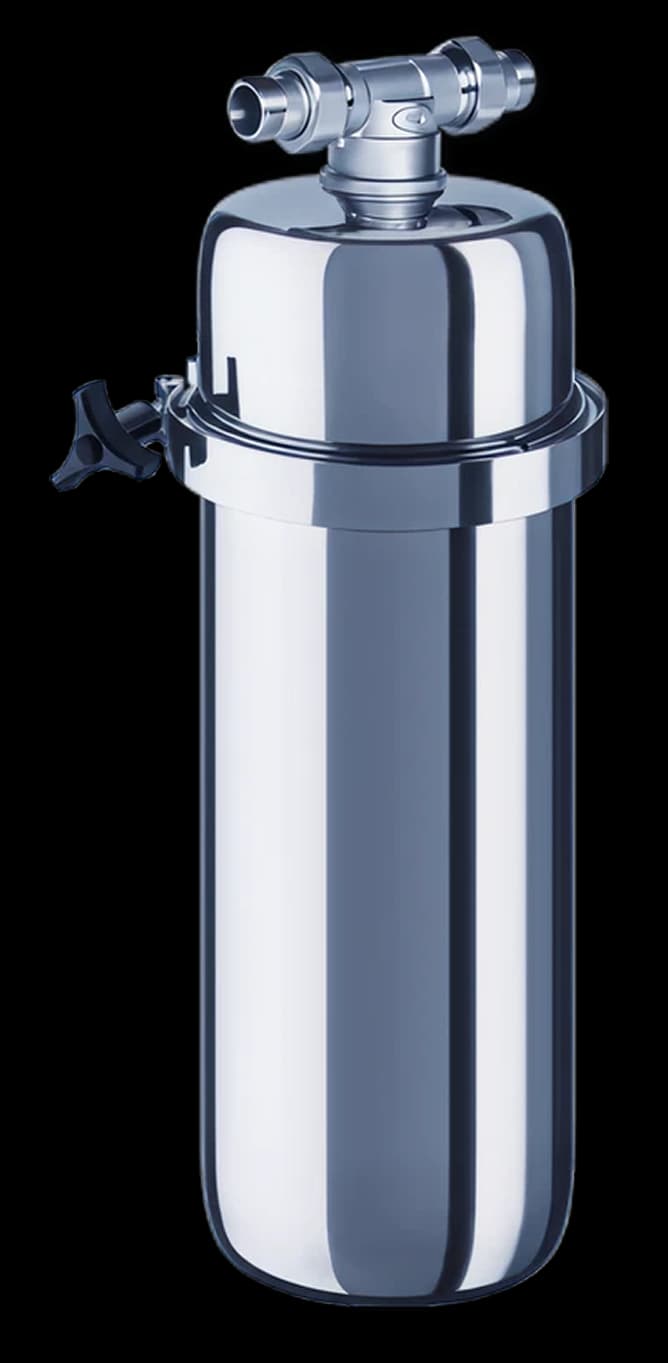
Selective adsorption protein-fibre filters (such as the Mam Nature Water FINE FILTER, with the Swiss Water Cartridge, validated by ETH Zurich University) achieve >96–>98.5% PFAS removal across long- and short-chain compounds without removing beneficial minerals. Point-of-entry installation ensures all water in the home — drinking, cooking, and bathing — is treated.
For households in known PFAS hotspots, testing your tap water through a certified laboratory before installing filtration allows you to quantify your exposure and verify the system is performing as expected post-installation.
Swiss-engineered PFAS protection — certified by ETH Zurich University.
Learn About the Fine FilterRelated Resources
Frequently Asked Questions
Which European countries have the worst PFAS tap water contamination?
Italy (Veneto region), the Netherlands (near Dordrecht), Belgium (near Antwerp), Germany (near military airfields and the Rhine corridor), and Sweden (near major airports) have documented the highest PFAS concentrations. However, low-level contamination is essentially ubiquitous across European water supplies.
Does the EU Drinking Water Directive adequately protect against PFAS?
The 2020 directive sets binding limits for the first time, which is progress. However, the EU limit of 100 ng/L per individual PFAS is 25 times higher than the US EPA's 2024 limit of 4 ng/L for PFOA/PFOS. Most independent scientific agencies consider the current EU thresholds insufficiently precautionary based on available health evidence.
Can standard water treatment plants remove PFAS?
No. Conventional water treatment using chlorination, coagulation, and sand filtration does not remove PFAS. Utilities require additional advanced treatment — granular activated carbon, nanofiltration, or reverse osmosis — to achieve significant PFAS reduction. Not all European utilities have installed these systems.
Is PFAS contamination a new problem?
PFAS have been in production since the 1940s and contaminating water sources for decades. The problem is not new, but awareness, testing capability, and regulatory attention have all accelerated dramatically since 2015. Many legacy contamination sites are still not fully characterised or remediated.
How can I check if my specific town has a PFAS contamination problem?
Check your water utility's annual report, the EWG PFAS Contamination Map (covering selected European sites), and your national environmental agency's groundwater monitoring data. In Switzerland, the BAFU (Federal Office for the Environment) publishes a national surface water monitoring database searchable by location.
Sources & References
- European Environment Agency (2023). PFAS contamination of soil, water and biota in Europe.
- EFSA (2020). Risk to human health related to PFAS in food. EFSA Journal 18(9):6223.
- EWG (2023). PFAS Contamination in Europe. Environmental Working Group.
- Swiss BAFU (2023). PFAS in der Schweiz: Nationale Überwachungsdaten. Federal Office for the Environment.