
Is PFAS in Tap Water Safe? What Swiss Tests Reveal
PFAS — per- and polyfluoroalkyl substances — have been detected in tap water supplies across Europe, including Switzerland. Often called "forever chemicals," they do not break down naturally and accumulate in the water and the body over time.
Published Swiss monitoring data — from cantonal laboratories and federal authorities (BAFU/FOEN) — has found measurable PFAS concentrations in some municipal supplies. Understanding what these results mean for your health is the first step toward protecting yourself.
This article explains what PFAS are, where they come from, the current regulatory limits, and what the science says about safe exposure thresholds.
What Are PFAS "Forever Chemicals"?
PFAS is a broad family of more than 12,000 synthetic chemicals used in non-stick cookware, food packaging, firefighting foam, waterproof textiles, and industrial processes since the 1940s.
Their defining feature is the carbon–fluorine bond — one of the strongest in organic chemistry. This makes them extraordinarily resistant to heat, water, and biological degradation, which is why they persist indefinitely in soil, groundwater, and living tissue.
The most studied members — PFOS and PFOA — were phased out under international agreements, but thousands of replacement PFAS remain in active use and continue to contaminate water sources.
PFAS Levels Found in Swiss Tap Water
Independent testing across Swiss municipalities has detected total PFAS concentrations ranging from 2 ng/L in rural alpine sources to above 20 ng/L near industrial zones and airports that historically used aqueous film-forming foam (AFFF).
The Swiss Federal Office for the Environment (BAFU) has adopted the EU drinking water directive threshold of 0.5 μg/L (500 ng/L) for total PFAS as a legal maximum. This is significantly higher than the precautionary limit of 4 ng/L recommended by the US Environmental Protection Agency (EPA) in 2024.
In most tested Swiss supplies, PFAS levels fall below the legal maximum. However, emerging science suggests that even low nanogram-per-litre concentrations may have health implications with chronic exposure.
Health Effects of Long-Term PFAS Exposure
The European Food Safety Authority (EFSA) established a tolerable weekly intake (TWI) of 4.4 ng per kilogram of body weight per week for the sum of four key PFAS. For an average adult, this equates to roughly 2–3 ng/L in drinking water when accounting for other dietary sources.
Scientific literature associates chronic PFAS exposure with thyroid hormone disruption, elevated cholesterol, reduced vaccine effectiveness, kidney and testicular cancer risk, and reproductive issues including reduced fertility and pregnancy complications.
Children and pregnant women face higher risks because developing organ systems and foetuses are more sensitive to endocrine-disrupting compounds.
Which Water Treatment Technologies Remove PFAS?
Not all filtration methods remove PFAS. Standard activated carbon filters show limited effectiveness, particularly against short-chain PFAS variants. Reverse osmosis (RO) removes 90–99% of PFAS but also strips beneficial minerals and wastes significant water.
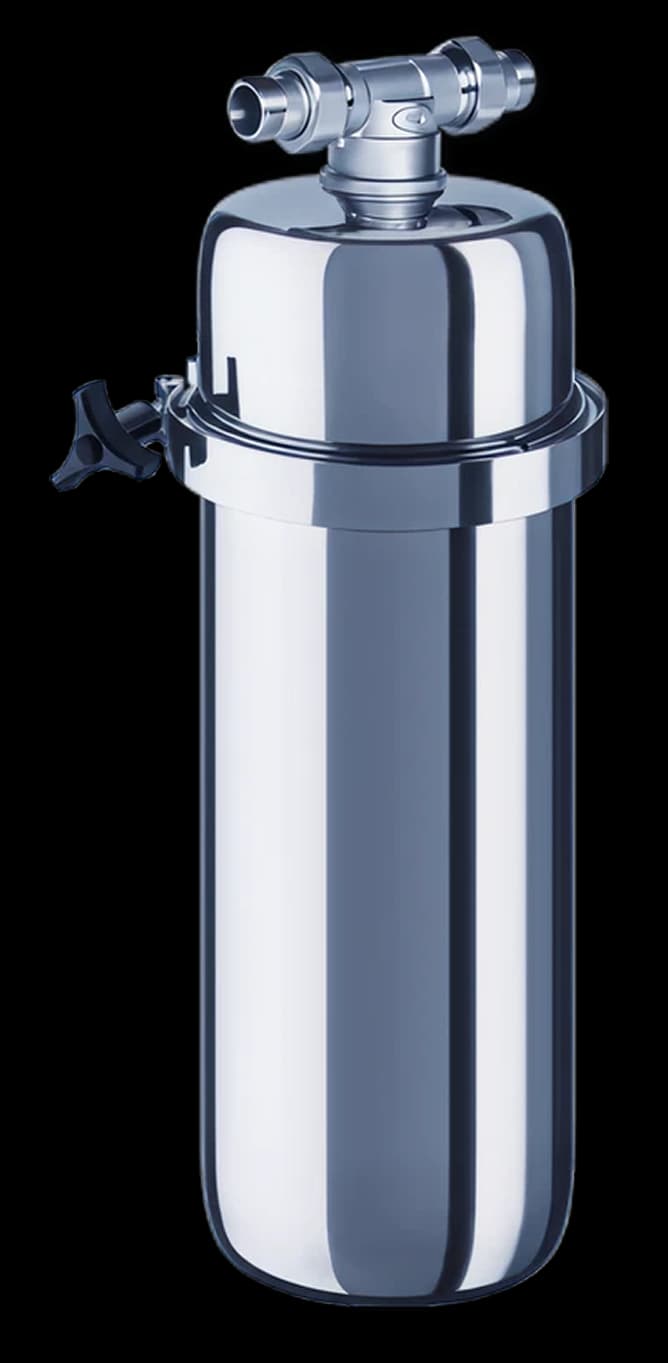
Selective adsorption using protein-fibre technology — the basis of the Mam Nature Fine Filter — achieves >96–>98.5% PFAS retention rates validated by ETH Zurich University. Unlike RO, this technology preserves essential minerals such as magnesium and calcium that are beneficial for health.
Ion exchange resins are another effective option but require regular regeneration with salt brine and produce contaminated wastewater as a byproduct, raising disposal concerns.
How to Check PFAS Levels in Your Tap Water
Your municipal water utility is legally required to publish annual water quality reports in Switzerland and the EU. Request the most recent report and look for PFAS or "per- and polyfluoroalkyl substances" in the contaminant tables.
If your utility does not test for PFAS or reports aggregated results you cannot interpret, independent certified labs such as ALS Global, Eurofins, or the cantonal laboratories offer home water testing kits for 150–400 CHF that cover 30–60 PFAS compounds.
A Mam Nature water quality consultation can also help you interpret test results and recommend the right filtration solution for your specific contamination profile.
Is Bottled Water a Safe Alternative to Tap?
Studies by Orb Media and Consumer Reports have found PFAS in a significant proportion of bottled water brands, including premium European mineral waters. The bottled water industry is subject to less stringent testing requirements than municipal suppliers in most countries.
Beyond PFAS, PET plastic bottles leach microplastics and endocrine-disrupting compounds including BPA and phthalates, particularly when exposed to heat or UV light.
Filtered tap water from a validated point-of-entry system offers better contamination control, eliminates plastic waste, and costs a fraction of bottled water over a 10-year household lifespan.
ETH Zurich-certified PFAS removal for your whole home.
Explore the Fine FilterRelated Resources
Frequently Asked Questions
What PFAS level in tap water is considered safe?
The US EPA set a maximum contaminant level of 4 ng/L for PFOA and PFOS individually in 2024. The EU and Switzerland allow up to 500 ng/L total PFAS, but EFSA's tolerable weekly intake implies a health-protective limit closer to 2–3 ng/L for daily drinking water.
Can boiling water remove PFAS?
No. Boiling water does not remove PFAS. Because PFAS are non-volatile, they remain in the water when it boils and actually become more concentrated as the volume reduces through evaporation.
How do I know if my tap water has PFAS?
Request your municipality's annual water quality report, which should include PFAS data. For a detailed analysis, send a water sample to a certified laboratory. A basic PFAS panel costs 150–400 CHF and covers the most common compounds.
Does the Mam Nature Fine Filter remove PFAS?
Yes. Independent testing at ETH Zurich University validated >96–>98.5% PFAS retention for the Mam Nature Fine Filter using selective adsorption protein-fibre technology. Unlike reverse osmosis, it preserves beneficial minerals while removing contaminants.
Are PFAS found in Swiss mineral water?
Some Swiss mineral water brands have been found to contain trace PFAS below current regulatory limits. However, because bottled water undergoes less frequent mandatory testing than tap water, the actual contamination rate may be underreported.
Sources & References
- US EPA (2024). PFAS National Primary Drinking Water Regulation. EPA-HQ-OW-2022-0114.
- EFSA (2020). Risk to human health related to the presence of perfluoroalkyl substances in food. EFSA Journal 18(9):e06223.
- Swiss BAFU. Perfluorierte Verbindungen (PFAS) in Gewässern und Trinkwasser.
- Mam Nature Swiss AG — ETH Zurich University Laboratory Performance Certificate (2024). Independent filtration validation report.