Best Whole-House Hard Water Solution Without Salt or Chemicals
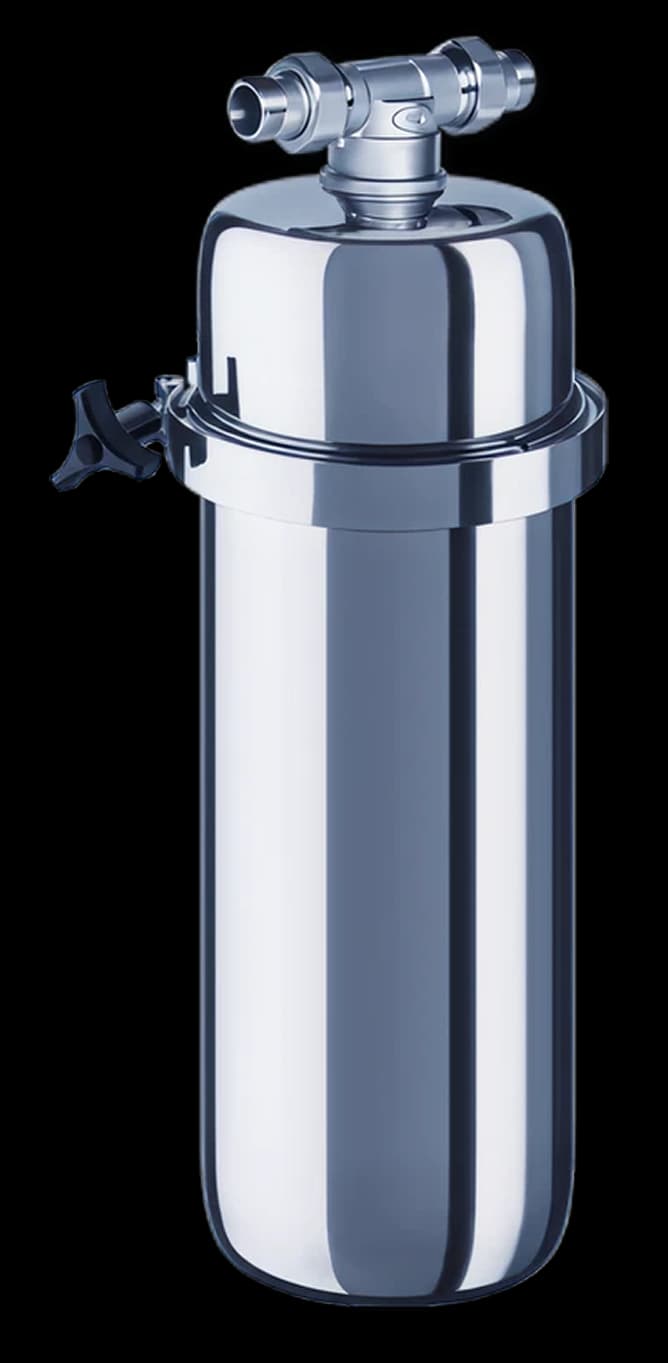
The conventional solution to hard water is a salt-based ion-exchange softener. It works, it is well understood, and it has been installed in European homes since the 1950s. It also requires bags of sodium chloride every month, discharges calcium and sodium-rich brine to the sewer, removes beneficial minerals from drinking water, and is facing increasing regulatory pressure in Germany, Switzerland, and the Netherlands.
This article covers the realistic alternatives — what the no-salt options actually are, what the evidence says about each, and which approach makes sense at different hardness levels. The goal is a complete picture, not a sales pitch for any single technology.
Why Households Want to Avoid Salt
Salt-based softeners require ongoing salt purchase and loading — typically 25kg bags every 4–8 weeks for a family of four. The annual cost of salt alone runs €150–300, plus water used during regeneration cycles (a standard softener uses 50–150 litres of water per regeneration). Over ten years, the consumable cost of a salt softener is comparable to or higher than the capital cost of the unit.
From an environmental standpoint, brine discharge is a documented concern for municipal wastewater treatment plants: salt passed through the softener increases the chloride load on the sewer, which is not removed by conventional biological wastewater treatment. In Baden-Württemberg (Germany) and several Swiss cantons, new salt softener installations require wastewater authority approval; some municipalities prohibit them outright.
Nutritionally, ion-exchange softening removes calcium and magnesium — minerals that are beneficial in drinking water. The WHO's drinking water guidelines note that adequate calcium and magnesium intake from drinking water may contribute to cardiovascular health. Softened water is also more corrosive to copper pipework, increasing the risk of copper leaching into the first flush from overnight-standing water.
Option 1 — Template-Assisted Crystallisation (TAC)
TAC systems use a granular polystyrene media with a surface coating that acts as a nucleation site. As hard water passes through the media, dissolved calcium carbonate crystallises onto the bead surface, forms a micro-crystal, then releases as a stable suspended particle that passes through plumbing without adhering to pipe walls or heating surfaces.
Independent validation from the UK's Water Research Centre (WRc) showed measurable scale reduction at hardness levels of 150–350 mg/L CaCO₃ in controlled test rig conditions. At hardness above 450 mg/L, performance is less consistent in the peer- reviewed literature. TAC requires no salt, no regeneration, and no electricity. The media does have a finite service life — typically 3–5 years — and must be replaced, which adds a periodic maintenance cost.
TAC systems need to be sized for your flow rate. Undersizing leads to incomplete treatment. Oversizing wastes media. Correct sizing requires knowing your household's peak flow demand (typically 20–30 litres per minute for a family of four) and your water hardness level.
Option 2 — Magnetic and Electromagnetic Conditioning
Magnetic conditioners apply a magnetic field to flowing water, influencing the nucleation of calcium carbonate crystals. The proposed mechanism is that the magnetic field promotes formation of aragonite-type crystals — a non-adhesive form of CaCO₃ that stays suspended in the water — rather than calcite, the compact, adhesive form that builds limescale on heating surfaces.
The scientific evidence for this mechanism is more nuanced than either enthusiastic marketing or dismissive scepticism suggests. A review published in Water Science & Technology (Hater et al., 2011) identified that magnetic effects on CaCO₃ crystallisation are real and reproducible under controlled conditions, but that practical effectiveness depends heavily on field strength, flow velocity, water chemistry (particularly carbonate balance), and residence time in the magnetic field. Generic clip-on magnets marketed cheaply produce inconsistent results. Systems engineered to the specific water flow and chemistry parameters of European residential plumbing perform more consistently.
Permanent magnet systems (as opposed to electromagnets) require no electricity. There are no consumables, no media to replace, no ongoing cost. The device is installed once and operates passively for the life of the installation.
The Water LIME — Magnetic Conditioning for European Hard Water
The Water LIME (€217 standalone, or included in the Complete Set and Complete Set Plus) is Mam Nature's whole-house anti-limescale device. It uses a configured permanent magnetic field applied at the point-of-entry housing to promote the calcite-to-aragonite crystal transition. Unlike generic magnetic devices, the Water LIME is integrated into a POE housing that ensures all incoming water passes through the conditioned field at the correct residence time and field exposure.
It requires no salt, no electricity, no consumables, and no annual maintenance beyond the annual cartridge service on the separate fine filter. The minerals remain in the water — calcium and magnesium are not removed. This means the treated water retains its mineral content and natural taste, while scale adhesion to heating elements and pipe surfaces is reduced.
In the Complete Set (€2,998), the Water LIME installs first in the sequence, followed by the auto-backwash particle filter and then the amyloid fine filter cartridge. This order means the conditioning acts on the full incoming water volume before filtration. In the Complete Set Plus (€3,598), the arrangement is the same, with an additional Dynamizer module at the outlet.
Which Solution for Which Hardness Level
Below 200 mg/L CaCO₃: scale is unlikely to cause serious appliance damage in most households. A preventive measure is optional. Regular descaling (citric acid or proprietary descalers) is sufficient maintenance at this hardness level.
200–400 mg/L: the European residential hard-water problem zone. TAC or magnetic conditioning (including the Water LIME) provide meaningful scale reduction at this range. The ongoing cost of TAC media replacement versus no ongoing cost for permanent magnet conditioning is a practical differentiator. Both avoid salt and chemicals.
Above 400 mg/L: the evidence for no-salt solutions is less consistent at very high hardness. Ion-exchange softening remains the most reliable option at this level. If salt is to be avoided for regulatory or personal reasons, a no-salt solution combined with more frequent appliance descaling is a pragmatic compromise — the no-salt device reduces (but does not eliminate) scale formation, and regular descaling addresses what accumulates.
Total Cost of Ownership — No-Salt vs Salt
A salt-based softener typically costs €800–1,500 to purchase and install, plus €150–300/year in salt, plus water costs for regeneration. Over ten years: €2,300–4,500 total. A permanent magnet device costs €217–500 depending on specification, installed once with no ongoing consumable cost. Over ten years: €217–500 total. TAC systems sit in between: lower capital cost than a salt softener, but media replacement every 3–5 years adds periodic cost.
The comparison changes depending on hardness level. At 250 mg/L CaCO₃ — typical of a Zurich or Brussels household — a no-salt solution provides adequate protection at dramatically lower lifetime cost. At 500 mg/L — typical of chalk aquifer areas in southern England — a no-salt solution alone may not provide sufficient protection and salt softening or the salt-free option paired with more frequent descaling becomes the more reliable choice.
The Water LIME — no salt, no electricity, no consumables. Included in the Complete Set with ETH Zurich-validated PFAS filtration.
Explore the Complete SetRelated Resources
Frequently Asked Questions
Does a no-salt system actually work for hard water?
For hardness levels typical of most European cities (150–400 mg/L CaCO₃), TAC and magnetic conditioning systems demonstrate measurable scale reduction in independent testing. They do not produce truly softened water — the minerals remain. What changes is the crystal form: rather than adhesive calcite building on surfaces, the calcium carbonate is conditioned to pass through as non-adhesive suspended particles. At very high hardness (above 450 mg/L), effectiveness is less consistent and salt softening remains the most reliable option.
Will a no-salt system make my water feel soft?
No. The "slippery" feeling of soft water is caused by the absence of calcium and magnesium — which a no-salt system does not remove. Your water will continue to taste and feel the same as before treatment; the difference is in what happens to surfaces — heating elements, pipes, and appliances see reduced scale adhesion. Some households prefer this, because they retain the mineral taste and do not have the sodium-enriched water that ion-exchange softening produces.
Do I still need to descale my appliances with the Water LIME installed?
In hard water areas, some periodic descaling of small appliances (kettles, coffee machines) may still be required — the Water LIME reduces scale adhesion, not all mineral content. The frequency of descaling is expected to reduce. Boiler and washing machine element scaling should reduce measurably, which is where the economic benefit primarily lies.
Can I combine the Water LIME with the amyloid fine filter?
Yes — this is precisely the Complete Set configuration. The Water LIME addresses limescale; the amyloid fine filter has controlled report results for seven named PFAS, named metals and free residual chlorine. Microplastics were not measured. These are complementary functions installed in the same point-of-entry housing, and they do not interfere with each other.
Is the Water LIME available as a standalone product?
Yes. The Water LIME can be purchased at €217 as a standalone device for households that already have a filtration system and want to add limescale protection, or for those whose primary concern is scale rather than contaminant removal.
Sources & References
- Hater, W., et al. (2011). Review of scale inhibition in technical water systems. Water Science & Technology 63(7), 1390–1396.
- Water Research Centre (WRc). Evaluation of scale-inhibiting devices. DWI Ref 70/2/226.
- World Health Organization (2009). Hardness in drinking-water. WHO/HSE/WSH/10.01/10.
- Swiss BAFU. Wasserenthärtungsanlagen — Umweltbeurteilung.
- Water Quality Research Foundation (WQRF, 2009). Scale buildup in residential water heaters and its effect on efficiency.