Hard Water Solutions Guide: What Actually Works and What Doesn't
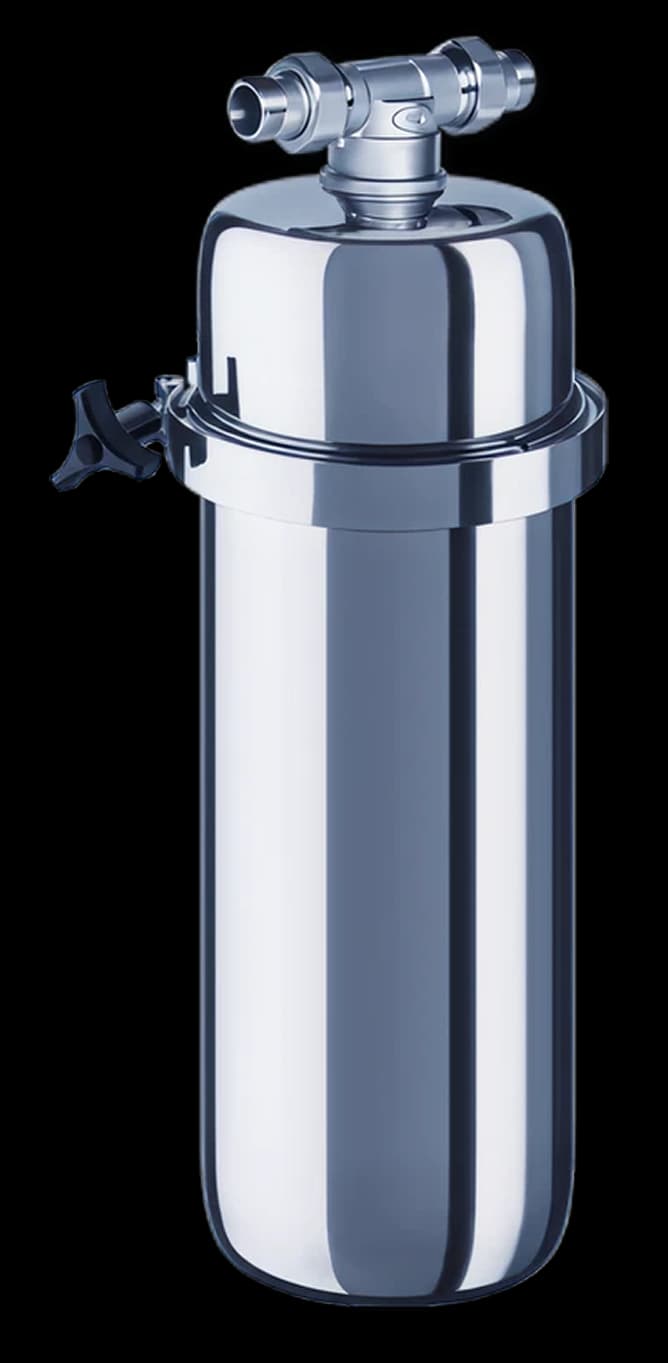
Hard water — water with elevated calcium and magnesium carbonate concentrations — is not a water quality problem in the sense that PFAS or lead are. The minerals that cause limescale are not toxic; calcium and magnesium are essential nutrients. The problem is engineering: calcium carbonate crystallises on heating surfaces, inside pipes, and on appliances, reducing efficiency, shortening service life, and increasing maintenance costs.
The market for hard water treatment is large and filled with products that range from highly effective to demonstrably useless. This guide explains the five main solution types, the evidence behind each, the conditions under which each works, and who it is right for.
No product in this guide is a universal solution. Hardness varies from 50 mg/L CaCO₃ in soft-water alpine regions to over 600 mg/L in limestone aquifer areas of southern England, Belgium, and the Netherlands. The right treatment depends on your specific hardness level.
Measuring Water Hardness — The Starting Point
Water hardness is measured in milligrams per litre of calcium carbonate (mg/L CaCO₃), or in degrees of German hardness (°dH), French hardness (°f), or US grains per gallon (gpg). These are all measures of the same thing; the conversion factors are: 1 °dH = 17.85 mg/L CaCO₃ = 10 °f = 1.04 gpg. A hardness of 150 mg/L CaCO₃ is considered medium-hard; 300 mg/L is hard; above 450 mg/L is very hard.
Before purchasing any treatment device, measure your hardness. Municipal water utilities in Europe are required to publish annual water quality reports that include hardness data. The DVGW (Germany), SUVA (Switzerland), and equivalent national bodies publish regional hardness maps. Simple dip-strip test kits (€5–15) also provide a quick reading. The test result determines which solution is appropriate — a device rated for medium hardness will underperform in very hard water.
Solution 1 — Ion-Exchange Salt Softeners
Ion-exchange softeners are the most effective hardness treatment available for residential use. They pass water through a resin bed that exchanges calcium and magnesium ions for sodium ions. The output water is fully softened — hardness near zero. The resin is periodically regenerated by flushing with a brine solution (sodium chloride), which restores the ion-exchange capacity and flushes the calcium and magnesium to drain.
Ion-exchange softeners are effective at all hardness levels, do not require electricity for the softening reaction (only for the control valve), and are well-understood technology with decades of residential data. Their drawbacks are significant: they require regular salt refilling (typically 25kg bags every 4–8 weeks for a family of four), add sodium to the treated water (a concern for people on low-sodium diets), and discharge calcium- and sodium-rich brine to the wastewater system.
From a regulatory standpoint, salt softeners are under increasing pressure in parts of Europe. Germany's wastewater regulations in several states restrict or prohibit softener brine discharge into municipal sewer systems. Switzerland's BAFU recommends against salt softeners where alternative solutions are effective. This does not apply everywhere, but the regulatory direction in northern Europe is away from salt-based systems.
Solution 2 — Template-Assisted Crystallisation (TAC)
TAC (Template-Assisted Crystallisation), also called catalytic media or nucleation- assisted crystallisation, uses a granular media (typically polystyrene beads with a special surface coating) to convert dissolved calcium carbonate into micro-crystals that remain suspended in the water and are carried through the plumbing without depositing on surfaces. No ion exchange occurs — minerals remain in the water, and no salt or regeneration is needed.
Independent research on TAC shows genuine promise in the hardness range of 150–350 mg/L CaCO₃. The UK's Water Research Centre (WRc) has conducted TAC evaluations for the Drinking Water Inspectorate showing measurable scale reduction in test rigs at medium hardness. Performance at hardness above 450 mg/L is less consistent in the published literature. TAC media has a finite service life (typically 3–5 years) and needs replacement, adding an ongoing cost.
Solution 3 — Magnetic and Electromagnetic Conditioners
Magnetic conditioners use permanent magnets (or electromagnetic coils powered by the mains) to apply a magnetic field to flowing water, claimed to alter the crystalline structure of calcium carbonate so it does not adhere to surfaces. The mechanism is real — magnetic fields can influence crystal nucleation — but the peer-reviewed evidence for practical scale reduction is mixed, with effect size varying by water chemistry, flow rate, and field strength.
The Water LIME device in the Mam Nature Complete Set and Complete Set Plus applies a targeted magnetic field at the point-of-entry housing, designed to promote conversion of calcite (the adhesive crystal form of CaCO₃) to aragonite (the non-adhesive form that stays suspended and flushes through). This is the same mechanism described in the calcite-vs-aragonite crystallography literature. Independent peer-reviewed evidence on this specific mechanism is discussed in detail in the Mam Nature article on magnetic limescale treatment.
Solution 4 — Polyphosphate Dosing
Polyphosphate dosing systems inject a small quantity of food-grade polyphosphate into the water supply. Polyphosphates sequester calcium and magnesium ions, keeping them dissolved and preventing crystal formation on surfaces. They are effective and widely used in commercial applications (boilers, cooling towers, municipal distribution systems).
For residential use, polyphosphate introduces a chemical additive to your drinking water — a tradeoff that many households prefer to avoid. Polyphosphate cartridges require periodic replacement. The UK's Drinking Water Inspectorate does not restrict polyphosphate use at approved dosing levels, and the compound is classified as safe for drinking water. However, households with specific dietary concerns about phosphates should note the addition.
Solution 5 — The Mam Nature Water LIME
The Water LIME is a whole-house anti-limescale device in the Mam Nature product range. It uses a configured magnetic field to target the crystalline transition from calcite to aragonite — the same transition that is the basis of the magnetic conditioner mechanism. Unlike generic magnetic conditioners, the Water LIME is designed specifically for the European hard-water range and integrates with the Mam Nature POE system as a component of the Complete Set and Complete Set Plus.
It requires no salt, no electricity for the conditioning function (the magnet is permanent), no chemicals, and has no consumables. It is not a softener — the minerals remain in the water, which is the desired outcome for taste and mineral intake. It works alongside the amyloid fine filter and, in the Complete Set Plus, the particle pre-filter, providing a combined solution for PFAS removal, sediment, and limescale prevention in a single installation.
How to Choose the Right Solution
For hardness below 200 mg/L CaCO₃: scale is unlikely to cause serious appliance damage. Treatment is optional. If scale is visible on shower heads or kettle elements, a descaling routine with citric acid may be sufficient.
For hardness 200–400 mg/L: any of TAC, magnetic conditioning, or the Water LIME may provide adequate protection for appliances and plumbing. Ion-exchange softening works but may be disproportionate to the problem. Consider the salt, maintenance, and environmental costs.
For hardness above 400 mg/L: ion-exchange softening provides the most reliable scale prevention at this level. TAC and magnetic solutions may provide partial protection but are less consistently effective at very high hardness. If you want to avoid salt, a combination of a no-salt solution plus more frequent appliance descaling is a pragmatic compromise.
The Complete Set combines ETH Zurich-validated PFAS filtration with the Water LIME no-salt anti-limescale device — one installation, every problem addressed.
Explore the Complete SetRelated Resources
Frequently Asked Questions
What is the hardest water region in Europe?
Among the hardest residential water supplies in Europe are found in parts of southern England (>400 mg/L in the Chalk aquifer areas of Kent, Essex, and Hertfordshire), Belgium (Brussels: ~300–350 mg/L), and parts of the Netherlands and northern Germany. Switzerland varies widely by region: Zurich canton is moderately hard (~200 mg/L); some Jura and Mittelland communities reach 400 mg/L. Alpine regions are generally soft (below 100 mg/L).
Does hard water affect health?
No — and possibly the opposite. Calcium and magnesium in drinking water contribute to dietary intake of these minerals. WHO guidance on drinking water notes that removing these minerals (as happens with ion-exchange softening) may reduce beneficial mineral intake. Hard water is an engineering problem, not a health hazard.
Does the Mam Nature filter remove hardness?
No. The public fine-filter report records controlled reduction results for seven named PFAS, named metals and free residual chlorine while calcium and magnesium remain in the outlet measurements. It does not include a microplastics measurement. The Water LIME handles limescale prevention without removing the minerals. Together they are the foundation of the Complete Set.
Can I use a TAC system if I have well water?
TAC systems perform best on consistent water chemistry. Well water can vary in hardness and mineral composition seasonally. If your well water fluctuates significantly, a TAC system may underperform when hardness spikes. Test your well water hardness at different times of year before committing to any no-salt solution.
What is the difference between a water softener and a water conditioner?
A water softener removes calcium and magnesium ions (by ion exchange with sodium) and produces truly softened water. A water conditioner changes the form or behaviour of calcium carbonate without removing it — the minerals remain in the water but are less likely to deposit on surfaces. Softeners eliminate scale; conditioners reduce it.
Sources & References
- World Health Organization (2009). Hardness in drinking-water. WHO/HSE/WSH/10.01/10.
- Water Research Centre (WRc). Evaluation of scale-inhibiting devices. DWI Ref 70/2/226.
- DVGW (2019). Trinkwasserhärte und Wasserbehandlung. Technical guidance.
- Hater, W., et al. (2011). "Review of scale inhibition in technical water systems." Water Science & Technology 63(7), 1390–1396.
- Swiss BAFU. Wasserenthärtungsanlagen — Umweltbeurteilung.