

What Is PFAS? The Complete Guide to Forever Chemicals
PFAS — per- and polyfluoroalkyl substances — are a family of more than 12,000 synthetic chemical compounds that have been manufactured and used in industrial and consumer products since the 1940s. They have been detected in the blood of virtually every person tested in modern biomonitoring studies, in the water supplies of hundreds of millions of people, in Arctic sea ice, in Himalayan snowpack, and in deep-ocean fish. The International Agency for Research on Cancer classified the most studied PFAS compound, PFOA, as a Group 1 carcinogen — carcinogenic to humans — in 2023.
The nickname "forever chemicals" reflects a chemical reality: the carbon–fluorine bond at the core of every PFAS molecule is one of the strongest bonds in organic chemistry, stable enough that no biological or environmental process is known to break it under normal conditions. PFAS do not degrade in soil, water, or living tissue. They accumulate. They travel. And their effects on human health accumulate with them.
This guide covers everything you need to understand PFAS: what they are chemically, how they were invented and spread, why they are called forever chemicals, where they come from, how they enter drinking water, what the regulations say, and what you can do to reduce your exposure.
The Chemistry of PFAS — Why the Carbon-Fluorine Bond Changes Everything
The defining structural feature of every PFAS compound is a chain of carbon atoms fully or partially substituted with fluorine atoms in place of hydrogen. The carbon–fluorine bond has a bond dissociation energy of approximately 544 kJ/mol — among the highest for any bond in organic chemistry. By comparison, the carbon–hydrogen bond that characterises most organic compounds has a bond dissociation energy of approximately 413 kJ/mol. This difference in bond strength is not merely academic: it translates directly into properties that make PFAS commercially valuable and environmentally catastrophic.
The high bond strength makes PFAS thermally stable: they do not decompose at the temperatures encountered in cookware, industrial processes, or environmental cycling. They are chemically inert: strong acids, strong bases, and oxidising agents that would degrade most organic contaminants leave PFAS unchanged. The fluorine atoms create a unique combination of both water repellency and oil repellency: this "omniphobic" property is the physical basis for non-stick surfaces and stain-resistant coatings. And critically, PFAS are biologically non-degradable: no known organism produces enzymes capable of cleaving the C–F bond under physiological conditions.
PFAS is a broad chemical family rather than a single compound. The two most studied legacy PFAS are perfluorooctane sulfonic acid (PFOS), a perfluoroalkyl sulfonate, and perfluorooctanoic acid (PFOA), a perfluoroalkyl carboxylate. Both are long-chain PFAS — meaning they have eight carbon atoms in the perfluorinated backbone — which makes them particularly bioaccumulative and persistent. Regulatory action has focused primarily on these two compounds, but the broader PFAS family includes thousands of variants including short-chain alternatives introduced as replacements, each with its own persistence and toxicological profile.
A Brief History — From Industrial Miracle to Global Contaminant
PFAS chemistry was discovered independently in the 1940s. 3M developed PFOS as the active ingredient in Scotchgard, a fabric and surface protector launched commercially in 1956. DuPont developed PFOA as a processing aid in the manufacture of polytetrafluoroethylene (PTFE, marketed as Teflon), with commercial production beginning in the 1950s. Both companies built large-scale manufacturing infrastructure and grew multi-billion dollar product lines on PFAS chemistry.
By the 1960s, PFAS were ubiquitous in consumer and industrial applications: non-stick cookware, food packaging with grease-resistant coatings, waterproof textiles and outerwear, stain-resistant carpet and upholstery, aqueous film-forming foam (AFFF) for fighting fuel fires at airports and military bases, semiconductor manufacturing, and chrome plating. Internal documents later released in litigation revealed that both 3M and DuPont had conducted internal toxicological studies by the 1970s and 1980s that showed concerning health signals — elevated cholesterol, liver effects, and developmental toxicity in animals — but this information was not made public for decades.
The scale of contamination became apparent to regulators in the early 2000s. In 2000, 3M voluntarily phased out PFOS production following pressure from the US EPA. PFOA phaseout followed under a voluntary programme with the US EPA completed in 2015. Both compounds are now subject to global phase-out commitments under the Stockholm Convention on Persistent Organic Pollutants. However, the contamination they created in soil, groundwater, and living organisms is not subject to any phase-out timeline — it is, by definition, permanent on human timescales.
The "Forever Chemical" Nickname — What It Actually Means
The colloquial label "forever chemicals" is not hyperbole. It is a description of the thermodynamic reality that the C–F bond does not break under conditions found in soil, water, or biological systems. Environmental half-lives for long-chain PFAS in groundwater are effectively unmeasurable because no degradation has been observed under natural conditions over the decades since contamination events occurred. In human serum, the half-life of PFOS is approximately 5.4 years and PFOA approximately 3.5 years (WHO/IPCS, 2008) — meaning that without new exposure, it takes over a decade for the body to clear approximately 90 percent of an existing burden, and for people with continuous daily exposure through drinking water, the body burden does not meaningfully decline.
The persistence in the environment has global consequences. PFAS have been detected in Arctic sea ice and seawater, in marine mammals in waters with no proximate industrial sources, in remote mountain glaciers including the Himalayas, and in rainwater sampled in Antarctica. A 2022 study published in Environmental Science and Technology Letters by Cousins et al. found that PFAS concentrations in rainwater across multiple geographic regions exceed the US EPA's 2024 health advisory levels — the authors concluded that there is effectively no location on Earth with pristine PFAS-free rainfall.
The environmental omnipresence of PFAS, combined with their bioaccumulative properties, means that even individuals with no direct industrial exposure accumulate PFAS through drinking water, food, and inhalation of household dust. This background accumulation is the reason that detectable PFAS are found in the blood of virtually all people in developed countries who have been tested — it is the baseline from which additional exposure from a contaminated drinking water supply adds further burden.
The Two Legacy Families — PFOS, PFOA, and What Replaced Them
PFOS (perfluorooctane sulfonic acid) is the prototypical perfluoroalkyl sulfonate. It was the core functional ingredient in 3M's Scotchgard line and was widely used in firefighting foam formulations (AFFF). PFOS persists in soil and groundwater at contaminated sites essentially indefinitely and bioaccumulates in the food chain. The Stockholm Convention listed PFOS and its salts in Annex B (restriction) in 2009, and IARC classified it as a Group 2B possible carcinogen in 2023.
PFOA (perfluorooctanoic acid) is the prototypical perfluoroalkyl carboxylate. It was used as a processing aid in PTFE manufacturing and as a functional ingredient in various industrial applications. PFOA does not remain in the final Teflon product at significant levels, but it contaminated soil and groundwater near manufacturing facilities on a scale that is still being remediated. The Stockholm Convention added PFOA and its related compounds to Annex A (elimination) in 2019. IARC classified PFOA as a Group 1 human carcinogen in 2023 — the highest hazard category — based on sufficient evidence for kidney and testicular cancer.
When PFOS and PFOA were phased out, manufacturers introduced replacement PFAS: short-chain PFAS with six or fewer carbon atoms (such as PFHxS, PFBS, and GenX compounds) and polyfluorinated compounds that are not fully fluorinated. These replacements were introduced on the assumption that shorter chains would be less bioaccumulative. While some short-chain PFAS do clear the body more quickly, evidence has accumulated showing they are equally environmentally persistent and that some are also biologically active. The replacement cycle has been described by researchers as "regrettable substitution" — swapping one persistent contaminant for another with a similar hazard profile.
Where PFAS Come From — Sources and Contamination Pathways
Industrial manufacturing is the most concentrated point source of PFAS contamination. Facilities that produce or use PFAS — fluorochemical manufacturers, chrome plating plants, semiconductor fabs, wire coating operations — have historically discharged PFAS to wastewater and into the air, contaminating surrounding soil and groundwater. The most documented cases in Europe include the 3M plant at Spinetta Marengo in Italy's Veneto region, the Chemours (formerly DuPont) facility near Dordrecht in the Netherlands, and facilities in the Rhine corridor in Germany and Belgium.
Airports and military bases are major secondary point sources. Aqueous film-forming foam (AFFF) used to extinguish fuel fires contains extremely high concentrations of PFOS and other perfluorinated surfactants. Training exercises and accidental spills have deposited PFAS-rich foam onto airfield soil for decades, and the contaminated groundwater plumes emanating from these sites can extend several kilometres. Both commercial airports and military air bases across Europe and North America are surrounded by PFAS groundwater contamination that has in many cases reached drinking water wells and surface water intakes.
Agricultural land receiving PFAS-containing biosolids (sewage sludge used as fertiliser) represents a diffuse source that is increasingly documented. Wastewater treatment plants concentrate PFAS from all inputs into the sludge fraction; when this sludge is applied to farmland, PFAS leach into groundwater over subsequent rainfall cycles. Consumer product disposal — PFAS-coated packaging in landfills, textiles in waste streams — generates additional leachate that enters groundwater. And atmospheric deposition carries PFAS globally, explaining detections in remote environments far from any industrial source.
How PFAS Enters Drinking Water
The primary route from these sources to the tap is groundwater and surface water contamination. PFAS are highly water-soluble (for ionic species) and move through soil with groundwater flow, reaching wells and aquifers that supply drinking water systems. Surface water intakes drawing from rivers or lakes downstream of industrial sources or AFFF-contaminated sites capture PFAS directly. Unlike many organic pollutants, PFAS are not significantly removed by conventional drinking water treatment — chlorination, coagulation, sedimentation, and sand filtration all leave PFAS concentrations largely unchanged. The US EPA notes that PFAS pass through standard treatment essentially intact.
Atmospheric deposition adds a diffuse background load to source waters globally. PFAS associated with airborne particulates and water vapour deposit onto catchment surfaces, enter surface water runoff, and percolate to groundwater. This mechanism explains why PFAS have been detected at measurable concentrations in drinking water sources in geographically remote areas with no proximate industrial contamination — including mountain sources in Switzerland that historically served as premium clean water supplies.
Within buildings, PFAS can also leach from certain types of plumbing, fittings, and fire-suppression system components containing fluoropolymers. For residents in older buildings or in areas with PFAS-containing water infrastructure, the first-draw from a cold tap after overnight stagnation can carry higher concentrations than mid-flow samples. This is one reason the first-draw sample collection protocol is standard for PFAS water testing — it captures the worst-case concentration representative of early morning consumption.
Regulation — US, EU, and Switzerland
Regulatory responses to PFAS in drinking water have accelerated dramatically since 2015 but remain uneven globally. The United States adopted the most stringent legally enforceable drinking water standards to date in April 2024, when the EPA finalised maximum contaminant levels (MCLs) of 4 ng/L for PFOA and PFOS individually, 10 ng/L for PFNA and PFHxS individually, and a hazard index approach for mixtures including HFPO-DA (GenX). These are enforceable standards requiring public water systems to comply by 2029, with testing obligations beginning earlier. The 4 ng/L limits for PFOA and PFOS are set at the lowest concentrations reliably detectable by current analytical methods and reflect the EPA's judgment that there is no safe level of exposure to these carcinogens.
The European Union's revised Drinking Water Directive (2020/2184), transposed by member states by January 2023, established the first EU-wide binding limits for PFAS in drinking water: 100 ng/L for any individual PFAS compound and 500 ng/L for the sum of all PFAS. These limits are significantly less stringent than the US EPA's 2024 standards — 25-fold higher for individual compounds. This discrepancy is a matter of ongoing regulatory discussion, not a reflection that the EU considers the health evidence less concerning. Several EU member states, including Sweden and Denmark, have adopted national limits closer to 4–10 ng/L for priority PFAS compounds. The European Commission is expected to review the directive limits as scientific evidence continues to accumulate.
Switzerland, while not an EU member, follows the EU drinking water framework under bilateral agreements and has adopted the EU PFAS limits. The Swiss Federal Office for the Environment (BAFU) operates a national PFAS monitoring programme for surface water and groundwater. Swiss authorities have documented exceedances of the precautionary 100 ng/L threshold near Zurich Airport and selected industrial sites in the cantons of Aargau and Zurich, and the programme continues to expand its analytical coverage to include short-chain PFAS and precursor compounds. The regulatory direction in all jurisdictions is toward stricter limits and broader compound coverage over time.
How to Protect Yourself from PFAS Exposure
Reducing PFAS exposure requires addressing multiple pathways simultaneously, but drinking water is both the most significant single route for most people and the most directly controllable. Start by obtaining your municipal water quality report and checking whether PFAS data are included. If you live near an airport, military base, or industrial site, commissioning an independent laboratory test — available from certified labs such as ALS Global, Eurofins, or SGS at a cost of approximately €150–400 for a 30–60 compound PFAS panel — gives you a definitive baseline.
For dietary exposure reduction: avoid overheating non-stick cookware above 260°C, where PTFE surfaces begin to degrade and release fluorinated breakdown products. Switch to stainless steel, cast iron, or ceramic alternatives where possible. Reduce consumption of food in PFAS-coated packaging — microwave popcorn bags and grease-proof fast-food wrappers are among the highest per-use sources. When purchasing personal care products and cosmetics, look for "fluoro," "PTFE," "PFC," or "perfluoro" on ingredient labels as indicators of PFAS-containing formulations, and choose alternatives without these ingredients.
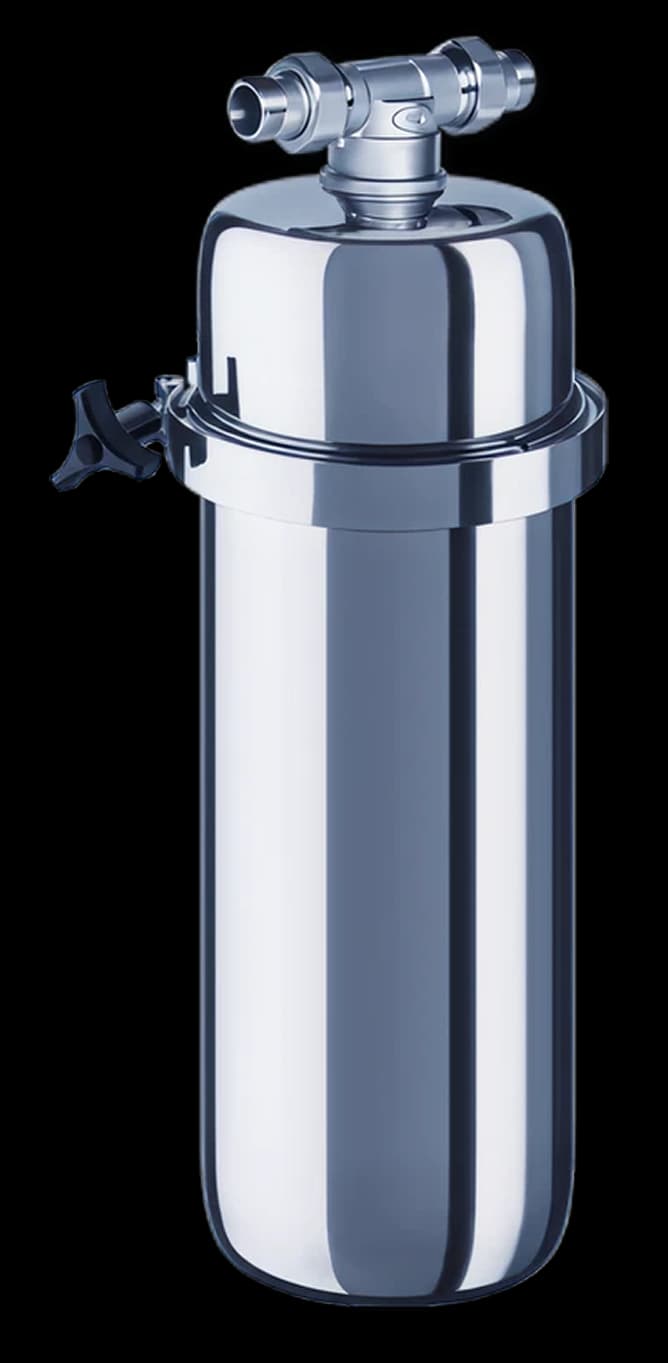
For drinking water, the most evidence-backed protection is adsorption filtration validated against PFAS at independent laboratories. The amyloid protein-fibre technology developed in collaboration with ETH Zurich University achieves greater than 96 to 98.5 percent PFAS removal in a single pass — across both long-chain and short-chain PFAS — without removing the calcium and magnesium that make water nutritionally beneficial, without requiring electricity, and without producing brine waste. Point-of-entry installation at the household mains treats all water entering the home: drinking, cooking, and bathing. Understanding your actual exposure level by testing first, then filtering, is the evidence-based approach to meaningful PFAS risk reduction.
Now you know what PFAS is — here is how to remove it from your water, validated by ETH Zurich.
See the PFAS Hotspot MapRelated Resources
Frequently Asked Questions
What does PFAS stand for?
PFAS stands for per- and polyfluoroalkyl substances. It is an umbrella term for a family of more than 12,000 synthetic chemicals that all share carbon–fluorine bonds as a defining structural feature. The most studied individual PFAS compounds are PFOA (perfluorooctanoic acid) and PFOS (perfluorooctane sulfonic acid).
Why are PFAS called "forever chemicals"?
Because the carbon–fluorine bond at the heart of every PFAS molecule has a bond dissociation energy of approximately 544 kJ/mol — among the strongest in organic chemistry — and no known biological or environmental process can break it under normal conditions. PFAS do not degrade in soil, groundwater, or living tissue and accumulate indefinitely. Environmental half-lives under natural conditions are effectively unmeasurable.
Is PFAS in everyone's blood?
Modern biomonitoring studies consistently find detectable PFAS in virtually all blood samples from people in industrialised countries. The US Centers for Disease Control and Prevention's National Health and Nutrition Examination Survey (NHANES) has documented PFAS in the serum of the general US population for over two decades. Equivalent surveys in Europe have found comparable ubiquity. This reflects chronic low-level background exposure from water, food, and consumer products, not necessarily any single contamination event.
What is the legal limit for PFAS in drinking water?
In the United States, the EPA's 2024 maximum contaminant levels are 4 ng/L for PFOA and PFOS individually. In the European Union and Switzerland, the Drinking Water Directive sets limits of 100 ng/L for any individual PFAS and 500 ng/L for the total sum of PFAS. The US limits are approximately 25 times more stringent. Neither set of limits is considered a guarantee of safety by independent scientific bodies — EFSA's 2020 tolerable weekly intake analysis implies a health-protective level of approximately 2–3 ng/L for daily drinking water intake.
What is the difference between long-chain and short-chain PFAS?
Long-chain PFAS have eight or more carbon atoms in the perfluorinated backbone and include PFOA and PFOS. They are more bioaccumulative and have been more extensively studied. Short-chain PFAS have fewer than eight carbons and were introduced as replacements after long-chain compounds were phased out. While short-chain PFAS generally clear the body somewhat faster, they are equally persistent in the environment and some have shown comparable biological activity. Several short-chain PFAS are now under regulatory scrutiny.
Does filtering tap water remove PFAS?
Yes, with the right technology. Standard granular activated carbon provides limited and variable PFAS removal, particularly for short-chain compounds. Selective adsorption using amyloid protein-fibre technology, developed in collaboration with ETH Zurich University, achieves greater than 96 to 98.5 percent PFAS removal in a single pass across both long-chain and short-chain PFAS. Reverse osmosis is also highly effective but strips beneficial minerals and wastes water. Point-of-entry installation treats all household water including drinking, cooking, and bathing.
Sources & References
- IARC (2023). Perfluorooctanoic acid (PFOA) and Perfluorooctane sulfonic acid (PFOS). IARC Monographs on the Identification of Carcinogenic Hazards to Humans, Volume 135.
- US EPA (2024). PFAS National Primary Drinking Water Regulation. EPA-HQ-OW-2022-0114. Federal Register, 89 FR 32532.
- EFSA (2020). Risk to human health related to the presence of perfluoroalkyl substances in food. EFSA Journal 18(9):e06223.
- Cousins I.T. et al. (2022). Outside the Safe Operating Space of a New Planetary Boundary for Per- and Polyfluoroalkyl Substances. Environmental Science and Technology Letters 9: e1171–1179.
- WHO/IPCS (2008). Perfluorooctane sulfonate (PFOS), perfluorooctanoic acid (PFOA) and their salts. Environmental Health Criteria 239.