
Water Softener vs Whole House Filter: They Solve Different Problems
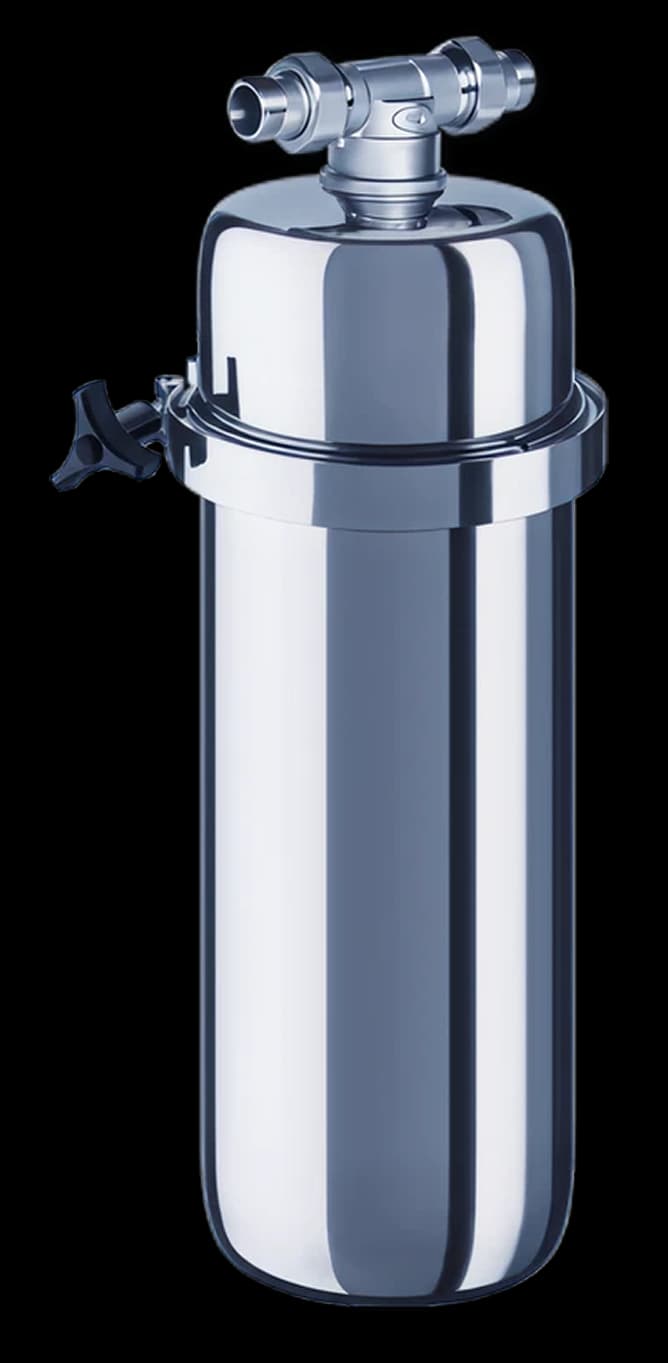
"Water softener vs whole house filter" is a comparison that frames two technologies as competitors. They are not. A water softener removes calcium and magnesium ions — and nothing else. A whole-house adsorption filter removes PFAS, heavy metals, chlorine byproducts, pesticides, and microplastics — and does not touch hardness. Choosing between them without understanding this distinction is the most common mistake buyers make.
The question is not which one is better. The question is: what does your water contain? If your water is hard and also contains PFAS or heavy metals — a common situation in Switzerland, Germany, Belgium, and the Netherlands — the honest answer is that you need both. If your water is soft and clean except for dissolved chemicals, you need only a whole-house filter. If your water is hard with no contamination concern beyond scale damage, you need only anti-limescale treatment.
This guide explains what each technology actually does, where it falls short, and how to match the right solution to your specific situation. Every recommendation is grounded in what the technologies are physically capable of — not marketing claims.
What a Water Softener Does (and What It Cannot Do)
An ion exchange water softener works by passing hard water through a resin bed loaded with sodium ions. As water flows through, calcium (Ca²⁺) and magnesium (Mg²⁺) ions — the minerals responsible for scale — bind to the resin and are replaced by sodium (Na⁺) ions. The result is softened water: scale will not form in pipes, boilers, or appliances because the ions that cause scale have been removed.
To remain effective, the resin must be regenerated regularly using concentrated brine — a sodium chloride solution. This regeneration cycle flushes the accumulated calcium and magnesium from the resin and discharges them to drain, along with a significant volume of salt-laden wastewater. A typical household ion exchange softener consumes 4–10 kg of salt per month (Water Quality Association data) and discharges 100–200 litres of brine during each regeneration cycle.
What a water softener cannot do is equally important to understand. It provides no removal of PFAS (per- and polyfluoroalkyl substances), no reduction of heavy metals such as lead, cadmium, or mercury, no removal of chlorine or its disinfection byproducts (trihalomethanes, haloacetic acids), no reduction of pesticides or agricultural chemicals, and no removal of microplastics. The resin is selective for divalent cations — it is not an adsorption system for dissolved organic contaminants. A household that installs a salt-based softener believing it provides broad water purification has addressed only one dimension of water quality.
What a Whole-House Adsorption Filter Does (and What It Cannot Do)
A whole-house adsorption filter uses an engineered media with very high surface area to bind dissolved contaminants as water passes through. Unlike ion exchange, selective adsorption can be designed to target specific molecule classes — PFAS compounds, heavy metal ions, chlorine byproducts, pharmaceutical residues, and microplastics — while allowing beneficial minerals such as calcium and magnesium to pass through unchanged. This selective preservation of minerals is a deliberate design feature, not a limitation: the WHO recommends a minimum calcium intake from drinking water for cardiovascular health.
The amyloid protein-fibre cartridge developed in collaboration with ETH Zurich University is a validated example of this approach. Research published in Chemical Society Reviews (Bolisetty, Peydayesh, Mezzenga, 2020) demonstrated single-pass removal performance of greater than 96% for PFAS compounds, with comparable results for lead, cadmium, chromium, and microplastics. Single-pass measurement is the relevant standard: it reflects one-time contact between water and media, not recirculated or optimised lab conditions. These results are certified in product-specific performance documents available at /reports-certifications.
What a whole-house adsorption filter cannot do is soften water. If your cold-water supply is at 350 mg/L CaCO₃ hardness and you install only an adsorption filter, your boiler and dishwasher will still accumulate scale over time. The filter will deliver clean water, but hard water. This is not a failure — it is simply a different dimension of water quality that requires a different solution.
The Key Difference — Two Separate Problems
Scale hardness and chemical contamination are independent water quality problems. They share the same pipe but have completely different causes, different health implications, and different solutions. Hardness is caused by geology: water passing through limestone and chalk dissolves calcium and magnesium carbonate before it reaches your home. Chemical contamination is caused by anthropogenic pollution: industrial discharges, agricultural runoff, ageing infrastructure leaching lead, and municipal treatment residuals.
No single technology solves both simultaneously. Ion exchange removes hardness but introduces sodium and removes nothing chemical. Adsorption removes chemical contaminants but preserves hardness minerals. The Water LIME anti-limescale device (which uses a magnetic field to convert calcite crystals to aragonite, preventing adhesion to surfaces) addresses scale formation without removing calcium from water — preserving the mineral while neutralising its destructive effect on surfaces. Understanding this three-way distinction — ion exchange, adsorption, and physical conditioning — is essential to building the right system for a given household.
The practical implication: do not buy a water softener hoping it will remove PFAS, and do not buy a whole-house filter assuming it will protect your boiler from scale. Map the problem first, then select the technology that addresses it.
When You Need Both — Hard Water Regions with Contamination Concerns
Switzerland, Germany, Belgium, the Netherlands, and parts of northern Italy have water hardness levels in the range of 200–450 mg/L CaCO₃ in many municipal areas — classified as "hard" to "very hard" by the WHO. These same regions have documented PFAS contamination near industrial zones, airports, and agricultural land, as confirmed by the European Environment Agency's 2023 PFAS monitoring data. A household in these regions faces both problems simultaneously.
For this situation, the Mam Nature Complete Set (€2,998) combines the adsorption filter with the Water LIME anti-limescale device and the Dynamizer. The Water LIME converts calcite crystals to aragonite using a targeted magnetic field — no salt, no electricity, no chemicals — preventing scale adhesion to boilers, heat exchangers, and pipe walls. The adsorption cartridge removes PFAS, heavy metals, and chlorine byproducts in a single pass. The two devices operate independently on the same supply line and address their respective problems without interference.
For households in hard-water regions where sediment is also a concern — well water, older distribution networks, visible rust in the supply — the Complete Set Plus (€3,598) adds an automatic-backwash particle pre-filter upstream of the adsorption cartridge. This protects the cartridge media from fouling, extending service life and maintaining consistent removal performance.
When You Need Only One
Not every household needs both systems. If your municipal water report shows hardness below 150 mg/L CaCO₃ — classified as "moderately soft" — and your tap water is drawn from a well-managed surface water source with no industrial contamination history, scale is not a material concern. In this case, an adsorption filter alone addresses the primary risk. The Essential (€1,090) or Essential Plus (€1,360, adding particle pre-filtration) provides whole-house chemical protection without the cost of anti-scale components you do not need.
Conversely, if your water quality report is clean from a chemical standpoint — low nitrates, below-threshold PFAS, no heavy metal exceedance — but your region has high hardness and you are primarily concerned about appliance longevity and energy efficiency (scale on a boiler element increases energy consumption by up to 10–15% according to DVGW research), anti-limescale treatment is the priority. The Water LIME can be installed as a standalone device at the point of entry. It requires no salt, no electricity, and no annual consumables beyond an occasional visual check.
Environmental and Health Considerations
The environmental footprint of ion exchange softeners is receiving increased regulatory scrutiny across Europe. Salt discharge from residential softeners raises the sodium content of municipal wastewater, complicating treatment and affecting receiving water bodies. Several Swiss cantons and German municipalities have already restricted the installation of new salt-based softeners in certain zones, and broader EU-level regulation is under discussion. The sodium added to softened drinking water also raises dietary sodium intake — a concern for households with hypertension or low-sodium dietary requirements, where the WHO recommends limiting sodium to less than 2,000 mg/day.
The Water LIME and Mam Nature adsorption filters require no salt, no brine discharge, and no electricity. The Water LIME operates entirely through the physics of magnetic field interaction with calcium carbonate crystal nucleation. The adsorption cartridge is a passive media change — water pressure drives contact between the water and the cartridge. Total energy consumption across the entire system: 0 kWh.
Total Cost of Ownership Comparison
A traditional ion exchange water softener carries a purchase cost in the range of €400–800 for a residential unit, plus installation (typically €100–250 for a plumber to connect the unit and commission the regeneration settings). Ongoing costs include salt: at €5–8 per 25 kg bag and a consumption of 4–10 kg/month, annual salt costs run €50–100 for light use to €150–300 for a larger household. Add periodic resin replacement (every 10–15 years, approximately €100–200) and service call-outs for regeneration system failures. A ten-year total cost of ownership for a standard residential softener is realistically in the range of €2,500–5,000 — before accounting for increased water waste during regeneration cycles.
By contrast, the Mam Nature Complete Set costs €2,998 at purchase. Annual consumable: one adsorption cartridge at €240, swapped in ten minutes without tools. The Water LIME has no consumable cost. Ten-year total: €2,998 + (10 × €240) = €5,398 — for a system that addresses both hardness and chemical contamination, versus a softener that addresses only hardness and adds sodium to your drinking water. The Essential tier (€1,090 purchase, €240/year) reaches a ten-year total of €3,490 for pure chemical filtration without any limescale concern. Use the savings calculator at /savings-calculator to model your specific household's numbers.
See which Mam Nature system matches your water — hardness, contamination, or both.
Explore the Complete SetRelated Resources
Frequently Asked Questions
Does a water softener remove PFAS?
No. Ion exchange water softeners are designed to remove calcium and magnesium ions via resin-based cation exchange. They are not designed to adsorb PFAS compounds, which are neutral organic molecules, not divalent cations. Peer-reviewed studies confirm that standard ion exchange resins provide negligible removal of PFAS. If PFAS is a concern, you need an adsorption-based filter — not a softener.
Will a whole house filter protect my boiler from limescale?
An adsorption filter alone will not prevent limescale because it does not remove calcium and magnesium from the water — it preserves them intentionally. To protect boilers and heating systems from scale, you need either an ion exchange softener (which removes calcium) or a physical conditioning device such as the Water LIME (which converts calcite to aragonite, preventing scale adhesion without removing minerals). The Complete Set and Complete Set Plus configurations combine adsorption filtration with the Water LIME for precisely this reason.
Is softened water safe to drink?
Technically yes, but with caveats. Ion exchange softening replaces calcium and magnesium with sodium. For households with high water hardness and normal health status, the added sodium is typically within safe limits. However, the WHO recommends that people with hypertension or who are on sodium-restricted diets avoid softened water as their primary drinking source. Softened water also lacks the beneficial calcium and magnesium that contribute to dietary mineral intake and are associated with reduced cardiovascular risk in epidemiological studies.
Can I install a water softener and a Mam Nature filter on the same line?
Yes, though this combination is less efficient than using a Water LIME plus adsorption filter. If you already have a salt-based softener installed, a Mam Nature adsorption filter can be placed downstream to remove any chemical contaminants the softener does not address. However, the combination introduces salt to your water before filtration, which is not ideal. For new installations, the Complete Set approach — Water LIME plus adsorption filter — is the more efficient and environmentally cleaner solution.
How do I know if my water is hard?
Your water provider is legally required to publish annual water quality reports that include total hardness expressed in mg/L CaCO₃ or German degrees of hardness (°dH). Below 150 mg/L (8.4 °dH) is generally considered soft to moderately soft; 150–300 mg/L is hard; above 300 mg/L is very hard. You can also purchase a simple hardness test strip (€5–10 from hardware stores) for a quick on-site measurement, or request a comprehensive water test from a certified laboratory for precise data.
Sources & References
- Water Quality Association (2024). Consumer Guide to Water Softening — Ion Exchange Technology and Salt Consumption.
- World Health Organization (2011). Guidelines for Drinking-water Quality, 4th ed. — Chapter on hardness, calcium, magnesium, and sodium.
- Bolisetty, S., Peydayesh, M., Mezzenga, R. (2020). Sustainable technologies for water purification from heavy metals. Chemical Society Reviews 49, 463–487.
- European Environment Agency (2023). PFAS contamination of soil, groundwater and drinking water in Europe.
- DVGW (German Technical and Scientific Association for Gas and Water) — Research on scale formation and energy efficiency in domestic heating systems.