

How to Know If Your Water Has PFAS: A Practical Step-by-Step Guide
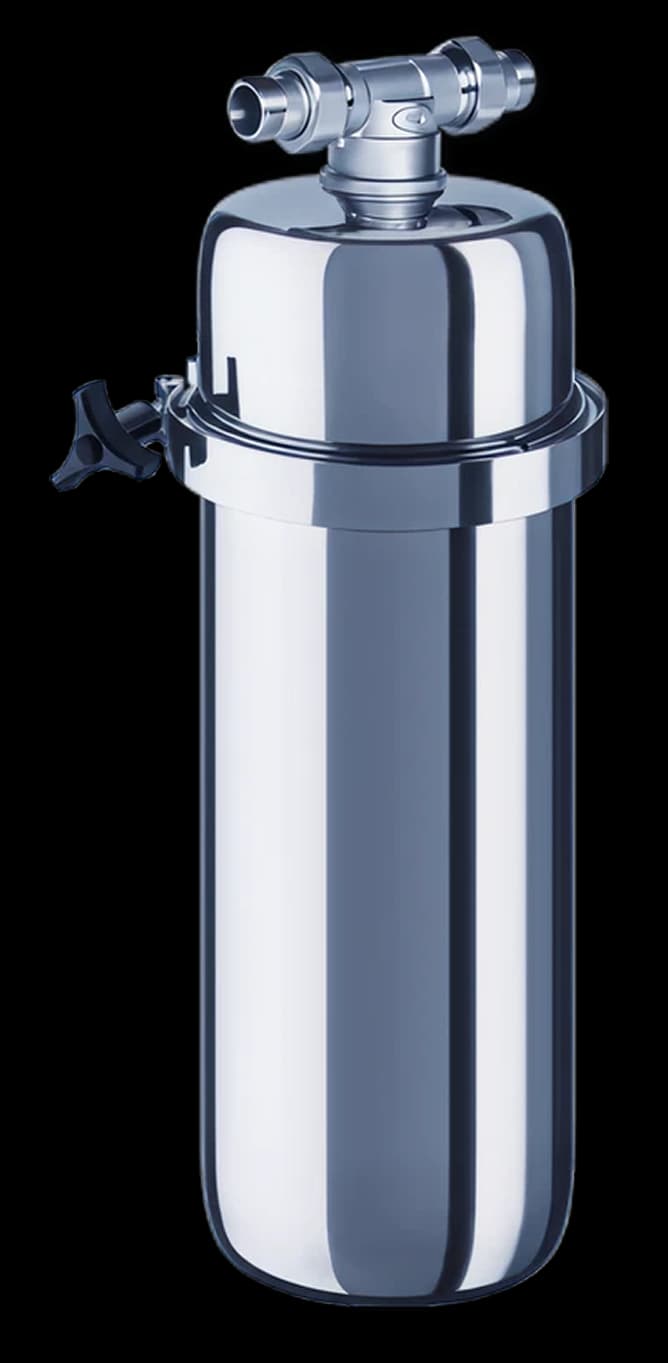
PFAS — per- and polyfluoroalkyl substances — cannot be detected by any human sense. They are colourless, odourless, and completely tasteless at the concentrations typically found in drinking water. This invisibility is precisely what makes them so hazardous: there is no sensory alarm to prompt action, and contamination can persist in a household supply for years without any indication that something is wrong.
The good news is that PFAS exposure from drinking water is measurable, and the information you need is either already publicly available or accessible through a straightforward laboratory test. This guide walks you through three concrete steps: reading your municipal water quality report, assessing whether your location is a known hotspot, and commissioning an independent laboratory analysis if you need more certainty.
Understanding your actual exposure level — rather than assuming the worst or dismissing the risk — is the foundation of an informed decision about whether additional protection is warranted.
Why PFAS Is Impossible to Detect Without Testing
The carbon–fluorine bond that defines PFAS chemistry makes these compounds extraordinarily stable — stable enough that they do not interact with taste receptors, do not produce any odour, and do not alter the appearance of water. According to the US Environmental Protection Agency (EPA), PFAS have been detected at health-relevant concentrations in public water systems serving hundreds of millions of people, with no observable difference in taste or smell compared to uncontaminated supplies. Contamination at 100 ng/L is chemically indistinguishable from contamination at 5 ng/L to the human palate.
This is fundamentally different from problems such as elevated iron (which imparts a metallic taste) or elevated chlorine (which has a detectable smell). PFAS offer no such cues. People living near industrial contamination sites have drunk heavily contaminated water for decades without any sensory indication — as was documented in the Veneto region of Italy, where PFOA from a manufacturing facility contaminated supplies for an estimated thirty years before public health action was taken.
The implication is simple but important: if you want to know whether your water contains PFAS, you must test it. Trusting your senses alone provides no meaningful information about PFAS content.
Step 1: Request Your Municipal Water Quality Report
The first and often most informative step is to obtain your water utility's annual quality report. In the European Union, water suppliers are legally required under the revised Drinking Water Directive (2020/2184) to publish water quality data annually and make it actively accessible to consumers. In the United States, all community water systems serving more than 25 people are required by the Safe Drinking Water Act to provide Consumer Confidence Reports (CCRs) to customers every year by 1 July. In Switzerland, cantonal authorities publish quality data through the Federal Office for the Environment (BAFU) monitoring programme.
When you obtain the report, search specifically for "PFAS," "PFOA," "PFOS," "perfluoroalkyl," "polyfluoroalkyl," or "fluorinated compounds." Some utilities report individual PFAS compound concentrations separately; others report a summed total. Both are useful. If the report predates 2021, PFAS testing may not have been included — utilities in many countries only began routine PFAS monitoring after the regulatory framework was updated. In that case, contact your utility directly and request the most current test results.
Bear in mind that regulatory reports reflect compliance with legal limits, not necessarily health-protective levels. A report showing PFAS "below the regulatory limit" means the utility is in compliance — but the EU legal limit of 500 ng/L total PFAS is significantly higher than the 4 ng/L limit the US EPA considers protective for PFOA and PFOS specifically (US EPA, 2024 National Primary Drinking Water Regulation). Reading the actual measured numbers, not just the compliance statement, gives you the full picture.
Step 2: Check Whether Your Location Is a Known PFAS Hotspot
PFAS contamination is not evenly distributed. Certain industrial activities generate disproportionate pollution: aqueous film-forming foam (AFFF) used in firefighting training at airports and military bases, fluorochemical manufacturing plants, chrome plating facilities, semiconductor fabrication, and agricultural land spread with PFAS-containing biosolids. If your drinking water comes from a source — surface water intake or groundwater well — located downstream or downwind of any of these facilities, your risk of elevated PFAS is meaningfully higher than background levels.
Several public resources help you assess your location. The European Environment Agency has mapped industrial sites registered under the European Pollutant Release and Transfer Register (E-PRTR), which includes facilities that report fluorinated compound releases. The Environmental Working Group has compiled a PFAS contamination map drawing on US and selected European data. In Switzerland, the BAFU PFAS monitoring programme publishes surface water data by location. For a European-specific overview of known contamination clusters, the Mam Nature PFAS page at /pfas provides a reference map of documented hotspot regions.
Being located near a hotspot does not automatically mean your drinking water is contaminated — water can be drawn from unaffected sources, or your utility may already operate advanced treatment — but it does elevate the prior probability enough to warrant closer investigation. Equally, the absence of a known industrial source nearby does not guarantee clean water: diffuse contamination from consumer product disposal, atmospheric deposition, and agricultural use is widespread and has been detected in geographically remote areas including Alpine snowpack (Kirchner et al., 2023, Environmental Science and Technology).
Step 3: Commission an Independent Laboratory Test
If your municipal report is inconclusive, out of date, or if you simply want independently verified data, a certified laboratory PFAS panel is the definitive answer. For European residents, accredited options include ALS Global, Eurofins, and SGS — all operating ISO 17025-accredited PFAS analysis services across multiple countries. In Switzerland, the cantonal laboratories (Kantonales Labor) conduct PFAS water testing for private clients. In the United States, the EPA maintains a directory of state-certified laboratories for drinking water analysis.
The typical cost for a comprehensive PFAS panel — covering 30 to 60 compounds including both long-chain and short-chain variants — ranges from approximately €150 to €400 depending on the number of analytes and the laboratory. For a "first-draw" sample, the standard protocol is to collect water from your cold tap without running it first, in an unrinsed 250 mL container provided by the laboratory, after the water has been stationary for at least six hours. This captures any PFAS that may leach from pipework or fittings and gives a worst-case reading representative of what you actually ingest first thing in the morning.
Request that the laboratory report individual compound concentrations rather than just a total PFAS sum. Knowing which specific compounds are present matters for both health assessment and filtration selection, since some technologies perform differently on long-chain PFAS (PFOS, PFOA, PFNA) versus short-chain compounds (PFHxS, PFBA, PFBS).
How to Interpret Your Test Results
Once you have results in hand, the key reference points are as follows. The EU and Swiss legal limits under the Drinking Water Directive are 100 ng/L for any individual PFAS compound and 500 ng/L for the sum of all PFAS detected. These are the thresholds above which a water utility is obligated to take remedial action. However, as noted, these legal limits sit well above what the scientific community considers health-protective for chronic daily exposure.
The European Food Safety Authority (EFSA) published a tolerable weekly intake (TWI) of 4.4 nanograms per kilogram of body weight per week for the sum of PFOS, PFOA, PFHxS, and PFNA in 2020 — the most comprehensive PFAS health assessment by a European regulatory body. Translating this TWI into a drinking water guideline, accounting for dietary contributions from food and other sources, implies a health-protective concentration of approximately 2–3 ng/L for daily drinking water intake by an average adult. This is the level below which ongoing daily exposure is considered unlikely to exceed the tolerable intake for most adults.
The US EPA's 2024 maximum contaminant levels set enforceable limits of 4 ng/L for PFOA and PFOS individually. If your results show total PFAS above 10 ng/L, or any individual compound above 4 ng/L, treating your drinking water with a validated filtration system is a well-supported precautionary measure regardless of whether you are below the EU legal limit.
What to Do If PFAS Is Detected in Your Water
The appropriate response depends on the concentration and your household's specific risk profile. For households with infants, pregnant women, or anyone with an elevated health risk, the precautionary threshold is effectively lower and action sooner is justified. For healthy adults, the decision point against the health-protective guidelines above is a reasonable framework.
In terms of filtration, the technology with the strongest documented PFAS removal is selective adsorption using amyloid protein-fibre technology, developed in collaboration with ETH Zurich University. This approach achieves greater than 96 to 98.5 percent PFAS removal in a single pass across both long-chain and short-chain compounds, without removing the calcium and magnesium that make water healthful. Reverse osmosis is also effective — achieving 90–99% removal — but strips all minerals, wastes two to four litres of water per litre of filtered output, and requires pressurised installation. Standard granular activated carbon provides variable and often insufficient removal, particularly for short-chain PFAS, and should not be the sole reliance where PFAS are a confirmed concern.
Ion exchange resins can achieve high PFAS removal but require periodic regeneration with salt brine and produce contaminated wastewater that must be disposed of safely. For a whole-home approach that treats all water entering the property — drinking, cooking, and bathing — a point-of-entry system installed at the mains provides the broadest protection. Dermal absorption of PFAS from bathing water is a secondary but documented exposure pathway, particularly for volatile short-chain PFAS.
Know your exposure — then filter it out with ETH Zurich-validated PFAS removal.
See the PFAS Hotspot MapRelated Resources
Frequently Asked Questions
Can I taste or smell PFAS in tap water?
No. PFAS are completely tasteless and odourless at the concentrations found in drinking water. The only way to know whether your water contains PFAS is to have it tested by a certified laboratory or to obtain your municipal utility's water quality report.
How much does a PFAS water test cost?
A certified laboratory PFAS panel covering 30–60 compounds typically costs between €150 and €400 in Europe, depending on the laboratory and the number of analytes. Cantonal laboratories in Switzerland and state-certified labs in the US offer equivalent services. The laboratory will supply the sample container and instructions.
What PFAS level should I be concerned about in my test results?
The US EPA (2024) set a maximum contaminant level of 4 ng/L for PFOA and PFOS individually. EFSA's 2020 tolerable weekly intake analysis implies a health-protective level of approximately 2–3 ng/L for total PFAS in daily drinking water. The EU legal limit of 500 ng/L is a compliance threshold, not a health safety guarantee. Any result above 10 ng/L total PFAS is a reasonable basis for installing point-of-entry filtration.
Does my municipality have to tell me about PFAS in my water?
In the EU, water suppliers must publish annual quality reports under the 2020 Drinking Water Directive. In the US, Consumer Confidence Reports are legally required annually. However, PFAS testing has only become routine in recent years; older reports may not include PFAS data. Contact your utility directly to request the most current PFAS analysis if the published report does not include it.
If I live near an airport, should I test my water for PFAS?
Yes, testing is strongly advisable. Airports that use or have historically used aqueous film-forming foam (AFFF) for firefighting are among the most significant PFAS point sources in Europe and North America. Groundwater and surface water within several kilometres of such facilities have frequently been found to contain elevated PFAS concentrations. An independent lab test will give you a definitive answer for your specific supply.
Sources & References
- US EPA (2024). PFAS National Primary Drinking Water Regulation. EPA-HQ-OW-2022-0114. Federal Register, 89 FR 32532.
- EFSA (2020). Risk to human health related to the presence of perfluoroalkyl substances in food. EFSA Journal 18(9):e06223.
- European Commission (2020). Directive 2020/2184 on the quality of water intended for human consumption (recast). Official Journal of the European Union.
- Kirchner M. et al. (2023). PFAS in Alpine snow: atmospheric deposition evidence. Environmental Science and Technology 57(12):5021–5031.
- Swiss BAFU (Federal Office for the Environment). PFAS in Gewässern und Trinkwasser. National monitoring programme data.