Revitalized Water vs Filtered Water: Is There a Health Difference?
Two things are sold under the banner of "healthy water": filtered water (contaminants removed, minerals preserved) and revitalized water (structurally treated, often post-filtration). Both are positioned as improvements on standard tap water. The health evidence behind each is not remotely equivalent.
Filtration can reduce specified contaminants when the product is tested for those compounds under defined conditions. For the Mam Nature cartridge, the public report lists seven named PFAS, named metals, free residual chlorine and other specified analytes; it does not measure microplastics.
Revitalization claims a different kind of improvement: changes to the water's molecular organisation, surface tension, or ORP that are argued to improve cellular hydration, taste, or metabolic response. The evidence base for these claims is substantially thinner. This article explains the difference and what it means for your purchasing decision.
The Health Case for Filtered Water
The health rationale for filtering drinking water rests on contaminant toxicology — a large, well-established body of research. PFAS are classified by IARC as Group 1 (PFOA, carcinogenic to humans, 2023) and Group 2B (PFOS, possibly carcinogenic). Chronic exposure is associated with kidney and testicular cancer, thyroid disruption, elevated LDL cholesterol, reduced vaccine efficacy in children, and reproductive harm. These associations come from large population studies including the C8 Health Project (70,000 participants in West Virginia) and Nordic cohort studies.
Lead in drinking water has no safe level of exposure for children, according to the WHO and US CDC. Lead exposure in early childhood is associated with irreversible cognitive deficits, reduced IQ, behavioural problems, and developmental delays. It enters tap water through corrosion of lead service lines and solder, still present in millions of homes across Europe and North America built before the 1980s.
The public Mam Nature performance report records controlled single-pass inlet and outlet measurements for seven named PFAS, with reduction from greater than 96% to greater than 98.5% depending on compound and detection limit. It provides separate values for named metals but does not include a microplastics measurement. These results apply to the stated test conditions and should not be generalised to every contaminant.
The Health Claims Made for Revitalized Water
Proponents of revitalized or structured water claim improvements including enhanced cellular hydration (water enters cells more efficiently), improved oxygen delivery, higher antioxidant activity, reduced chronic inflammation, and general wellness effects including better sleep, skin quality, and energy levels.
The mechanism proposed for most of these claims is that vortex treatment, magnetic exposure, or other physical processes alter the molecular organisation of water in a way that persists into the body and influences cellular processes. This mechanism has not been established in peer-reviewed literature. Water's hydrogen bonding network re-equilibrates at picosecond timescales — far too fast for any external structuring to persist through the digestive and circulatory systems.
EFSA, the European Food Safety Authority responsible for approving health claims on food and beverages in the EU, has not approved any health claim for structured, vortexed, revitalized, or magnetised water. This is not a regulatory oversight — it reflects the absence of adequately controlled human trials demonstrating the claimed effects.
What Vortex Treatment Actually Changes
Measurable physical changes following vortex treatment include temporary changes in dissolved gas concentration (oxygen redistribution, partial degassing), changes in surface tension (measured by tensiometry), and changes in ORP (oxidation-reduction potential — a measure of electron donor/acceptor tendency). These changes are real, measurable with standard instruments, and reported in peer-reviewed literature.
What is not established is whether these transient physical changes — which normalise within minutes to hours as water equilibrates — produce the wellness benefits claimed. The gap between "surface tension changes transiently" and "cellular hydration improves measurably in humans" requires a chain of biological causation that has not been documented in adequately controlled trials.
Taste and mouthfeel changes from vortex treatment are the most consistently reported subjective outcome. Some sensory panels find vortex-treated water smoother or fresher tasting. These sensory effects, while not clinical outcomes, are real consumer experiences and a legitimate basis for a product category.
The Honest Comparison
The health case for filtered water is strong, quantified, and based on decades of independent research. Removing PFAS, lead, and chlorine byproducts from drinking water has measurable health benefits, particularly for children, pregnant women, and immunocompromised individuals.
The health case for revitalized water, as a standalone category, is weak in terms of peer-reviewed clinical evidence. Sensory benefits (taste, mouthfeel) are real and subjective. Transient physical changes (ORP, surface tension) are measurable but of uncertain biological relevance. Therapeutic or clinical claims are currently unsupported by EFSA-approved evidence.
The practical implication: if you can only do one, filter your water. If you have already invested in validated filtration and want to add a revitalization stage for sensory quality, the risk is low and the cost at the Dynamizer level is contained within the Complete Set bundle.
Where Filtration and Revitalization Work Together
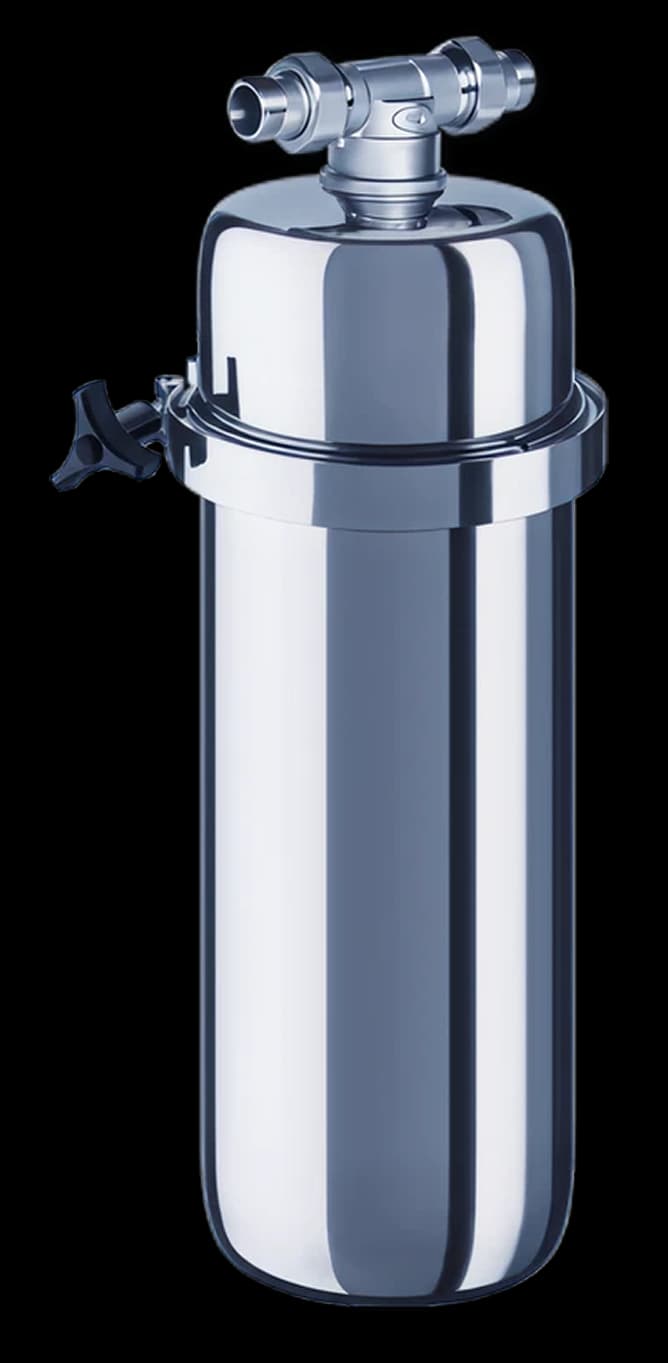
In the Mam Nature Complete Set and Complete Set Plus, the sequence is: mains water → Water LIME anti-limescale → amyloid fine-filter cartridge → Dynamizer vortex stage. The public report provides controlled results for named PFAS, metals and other specified analytes; it does not include microplastics. The Dynamizer is a separate downstream stage.
This sequencing matters. Applying vortex treatment to contaminated water does not remove contaminants. Applying filtration after revitalization does not preserve the structural changes. Clean water first, then structural treatment if desired — this is the technically sound order of operations, and it is how the Mam Nature system is designed.
For buyers whose primary concern is a contaminant covered by the public cartridge report, Essential or Essential Plus is sufficient — the Dynamizer stage adds sensory value, not filtration performance. For buyers who want both validated contamination removal and a revitalization stage, the Complete Set provides both in one system.
Validated filtration first. Revitalization stage included in the Complete Set.
Explore the Complete SetRelated Resources
Frequently Asked Questions
Is revitalized water healthier than tap water?
This depends on what "revitalized" means. If revitalized water has also been filtered to remove PFAS, heavy metals, and chlorine byproducts, then yes — the filtration component produces documented health benefits. If "revitalized" refers only to vortex treatment or magnetic exposure without filtration, the health evidence is currently insufficient to make that claim for the structural treatment specifically.
Is revitalized water better than filtered water?
They are not substitutes. Filtration removes contaminants — a documented health intervention. Revitalization changes physical properties (surface tension, ORP, taste) that are real but of uncertain biological relevance. "Better" depends on what concern you are addressing. The most defensible approach is to filter first, then optionally apply revitalization downstream.
Does the Dynamizer replace filtration?
No. The Dynamizer is the final stage of the Complete Set, positioned after the amyloid fine filter. It applies a vortex treatment to already-filtered water. It is not the stage responsible for the cartridge's reported PFAS or metal reduction. Filtration and revitalization are separate functions performed by separate components in the system.
What is the ORP of tap water vs revitalized water?
Tap water ORP varies by source and treatment, typically ranging from +200 to +400 mV for chlorinated municipal supplies. Vortex-treated water sometimes shows lower (more negative) ORP values, though the effect is variable and short-lived. Filtered water from which chlorine has been removed often has a lower ORP than unfiltered chlorinated tap water — so filtration itself can move ORP in the direction revitalization advocates consider beneficial.
Should I buy a filter, a revitalizer, or both?
Filter first — always. If your budget allows and sensory quality matters to you, a revitalization stage downstream of a validated filter adds low-risk value. The Mam Nature Complete Set packages both in a single whole-house system at the €2,998 price point. If budget is the constraint, the Essential (€1,090) provides validated contamination removal without the revitalization stage.
Sources & References
- IARC (2023). "PFOA classified as Group 1 carcinogen." IARC Monographs Volume 135.
- WHO (2011). "Lead in drinking water." WHO/HSE/WSH/10.01/4.
- European Food Safety Authority. Register of EU health claims on foods.
- Bolisetty, S., Peydayesh, M., Mezzenga, R. (2020). Sustainable technologies for water purification from heavy metals. Chemical Society Reviews 49, 463–487.