
Pharmaceutical Residues in Tap Water: What's There and What Removes It
Every year, millions of tonnes of pharmaceutical compounds are consumed by humans and animals across Europe. A significant fraction of those compounds — excreted unchanged or as active metabolites — passes through wastewater treatment plants and re-enters rivers, lakes, and groundwater. The European Environment Agency has found pharmaceuticals in 60–70 percent of European river samples, and a subset of those compounds eventually makes its way into drinking water supplies, albeit typically at low nanogram-per-litre concentrations.
The presence of pharmaceuticals in drinking water is not a new discovery, but the scientific understanding of its implications has deepened considerably over the past decade. Of particular concern are endocrine-active compounds such as synthetic estrogens, antibiotics that promote resistance gene transfer, and persistent compounds such as carbamazepine (an antiepiletic) and diclofenac (an anti-inflammatory) that are poorly removed by standard wastewater treatment.
This article explains how pharmaceutical residues enter the water supply, what municipal treatment does and does not remove, what the health science says about chronic trace exposure, and which filtration technologies achieve the most reliable removal.
How Pharmaceuticals Enter Drinking Water
The dominant pathway is biological excretion. When a person takes a medicine, a proportion is absorbed and metabolised by the body, but a fraction is excreted unchanged in urine and faeces and enters the wastewater system. Hospitals, care homes, and intensive livestock operations are concentrated point sources, but ordinary household medicine use generates dispersed input across entire catchments. A second pathway is direct disposal: unused medicines flushed down the toilet or sink bypass metabolic dilution entirely and enter the wastewater stream in near-intact form.
The principal categories of pharmaceuticals detected in European surface water and, at lower concentrations, in drinking water include: non-steroidal anti-inflammatory drugs (NSAIDs) such as ibuprofen, diclofenac, and naproxen; synthetic steroid hormones including 17-alpha-ethinylestradiol (EE2, the synthetic estrogen in oral contraceptives) and natural estrogens; antibiotics across multiple therapeutic classes (fluoroquinolones, sulfonamides, macrolides); antiepileptics such as carbamazepine; antidepressants including fluoxetine and sertraline; beta-blockers; and antihypertensives including ACE inhibitors.
The World Health Organization has specifically evaluated diclofenac in the context of drinking water safety and identified it as a high-priority compound for risk assessment, noting its widespread occurrence in surface water and drinking water globally and its ecotoxicological effects on fish and invertebrates at concentrations found in the environment. Swiss Federal Office for the Environment (BAFU/FOEN) monitoring data confirm the presence of both diclofenac and carbamazepine in Swiss surface waters used as drinking water sources, with carbamazepine being particularly persistent because it is not readily biodegradable.
What Conventional Wastewater Treatment Removes — and What It Misses
Standard municipal wastewater treatment was designed primarily to reduce biological oxygen demand, suspended solids, nitrogen, and phosphorus. It was not engineered for the removal of trace organic micropollutants, and many pharmaceuticals pass through the treatment process largely intact. The conventional activated sludge process — aerobic biological treatment — achieves highly variable pharmaceutical removal: easily biodegradable compounds such as ibuprofen are removed at rates of 80–95 percent, but recalcitrant compounds including carbamazepine, diclofenac, and many antibiotics are removed at efficiencies below 30 percent, and some synthetic estrogens are partially transformed into bioactive metabolites rather than fully mineralised.
Chlorination at the drinking water treatment stage oxidises some pharmaceutical compounds, but the process is incomplete and generates halogenated transformation products whose toxicological profile is often poorly characterised. Ozonation achieves much more complete mineralisation of many pharmaceuticals and is increasingly adopted by progressive water utilities — Switzerland's FOEN has supported partial ozonation upgrades at several cantonal plants as part of the national micropollutant programme — but ozonation is not universal and itself requires subsequent biological filtration to control ozone byproducts.
The net result is that a subset of pharmaceutical compounds reaches the consumer's tap at concentrations that range from below the limit of detection to several hundred ng/L, depending on the compound, the catchment, and the treatment chain in place. Carbamazepine is frequently cited as the most reliable marker of pharmaceutical contamination in drinking water precisely because it survives nearly all conventional treatment steps and can be detected at pg/L sensitivity by modern analytical methods.
Health Implications of Chronic Trace-Level Exposure
The primary question is whether nanogram-per-litre concentrations of individual pharmaceutical compounds pose a direct health risk to people consuming the water daily over a lifetime. For most individual compounds at the concentrations currently detected, the margin between the effective pharmacological dose and the estimated daily intake through drinking water is large — typically four to six orders of magnitude. On that basis, many regulatory toxicology assessments conclude that direct pharmacological harm from any single compound is unlikely at current environmental concentrations.
However, this risk framing has meaningful limitations that the World Health Organization and academic researchers have explicitly noted. First, drinking water contains not one pharmaceutical compound but a mixture of potentially hundreds simultaneously. The toxicological interaction of this mixture — particularly where compounds act on overlapping biological targets — is not adequately characterised by individual compound assessments. Second, certain classes of compounds raise specific concerns at low concentrations: synthetic estrogens such as EE2 are biologically active at sub-nanogram concentrations because the estrogen receptor is highly sensitive; antibiotics at sub-inhibitory concentrations drive the selection and transfer of antibiotic resistance genes in gut microbiota, which is a public health concern independent of direct toxicity to the host.
Third, vulnerable subpopulations — pregnant women, infants, immunocompromised individuals, and people with existing endocrine disorders — face different risk profiles than healthy adults. The WHO's guidance on pharmaceuticals in drinking water acknowledges that the scientific uncertainty in mixture risk assessment and the absence of epidemiological data on lifetime low-dose exposure justifies a precautionary approach for consumers who wish to reduce exposure.
The Regulatory Landscape — What Is and Is Not Regulated
Pharmaceuticals are not yet subject to mandatory maximum contaminant levels in drinking water in the European Union or in most other major jurisdictions. The revised EU Drinking Water Directive (2020/2184) established for the first time a "watch list" mechanism for emerging contaminants, allowing the European Commission to add pharmaceuticals and other compounds to a monitoring obligation before binding limits are set. The watch list in its initial form includes estrogens and selected antibiotics, signalling regulatory intent to eventually introduce enforceable limits.
Switzerland's national micropollutant programme — launched by the FOEN following the 2016 amendment to the Waters Protection Act — requires a subset of major wastewater treatment plants to install advanced treatment (ozonation or activated carbon) capable of removing micropollutants including pharmaceuticals by at least 80 percent. This programme, one of the most advanced of its kind in Europe, will cover the largest plants by the early 2030s. Even under this framework, some pharmaceuticals in some supplies will remain inadequately addressed, and the programme does not extend to drinking water treatment directly.
The regulatory trajectory is clearly toward stricter controls and more comprehensive monitoring. But the gap between current monitoring obligations and enforceable removal standards means that for the foreseeable future, point-of-use and point-of-entry filtration remains the most reliable way for an individual household to address pharmaceutical residues in their drinking water supply.
What Filtration Technologies Remove Pharmaceutical Residues
Not all filtration technologies are equally effective against pharmaceutical residues. Standard granular activated carbon (GAC) removes many pharmaceuticals through adsorption, but performance varies significantly by compound depending on the compound's hydrophobicity, charge, and size. Hydrophobic compounds such as many antibiotics and hormones adsorb well onto GAC; highly polar, charged compounds such as many beta-blockers and ACE inhibitors adsorb poorly. GAC also saturates over time, and spent carbon can desorb previously captured compounds if conditions change — a phenomenon of particular concern with variable-temperature supplies.
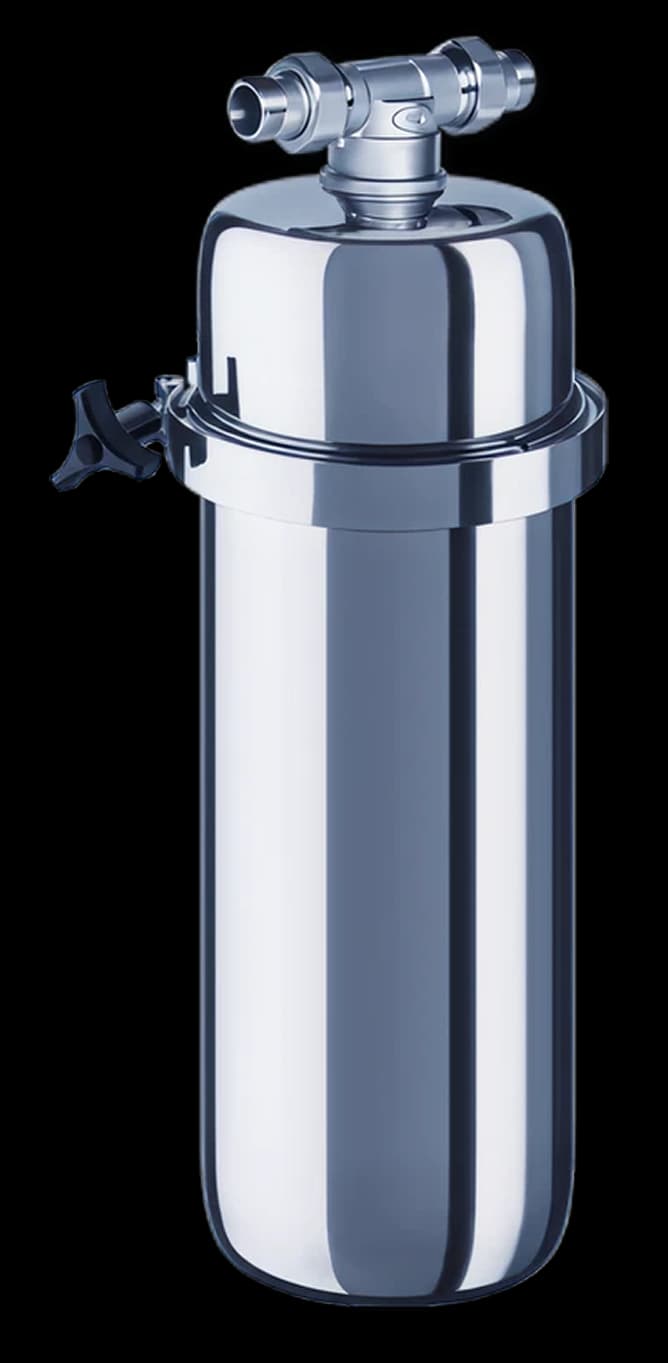
Advanced activated carbon in block or higher-density granular form performs better than loose GAC for micropollutant removal, providing greater contact time and surface area per unit volume. The amyloid protein-fibre adsorption technology developed in collaboration with ETH Zurich University removes organic micropollutants — including pharmaceutical compounds in the same chemical categories as pesticides, hormones, and polar organic contaminants — through selective adsorption mechanisms that operate across a broader range of compound polarities than GAC alone. This technology operates without electricity, produces no brine waste, and preserves beneficial calcium and magnesium in the filtered water.
Reverse osmosis achieves comprehensive removal of pharmaceutical compounds — the membrane pore size excludes essentially all organic molecules above a certain molecular weight — but at the cost of stripping all dissolved minerals, producing two to four litres of concentrated reject water per litre of treated output, and requiring pressurised plumbing. For whole-home treatment covering drinking, cooking, and the preparation of infant formula, a point-of-entry adsorption system provides broader coverage than point-of-use RO at the kitchen sink and addresses dermal and inhalation exposure pathways from bathing water.
Reduce pharmaceutical residues and organic micropollutants with ETH Zurich-validated whole-home filtration.
Explore the Essential PlusRelated Resources
Frequently Asked Questions
Are pharmaceutical residues in tap water dangerous?
Individual pharmaceutical compounds are typically detected at concentrations many orders of magnitude below pharmacological doses, and regulatory assessments generally consider direct harm from any single compound unlikely at current levels. However, the WHO and academic researchers have highlighted meaningful uncertainties: mixture effects from hundreds of compounds acting simultaneously, endocrine activity of synthetic estrogens at sub-nanogram concentrations, and the promotion of antibiotic resistance genes by sub-inhibitory antibiotic levels are concerns that individual compound risk assessments do not fully capture.
Which pharmaceutical compounds are most commonly found in tap water?
The most consistently detected compounds in European tap water and source water include carbamazepine (antiepileptic), diclofenac (anti-inflammatory), ibuprofen metabolites, 17-alpha-ethinylestradiol (synthetic estrogen from oral contraceptives), metformin (diabetes medication), and caffeine. Carbamazepine in particular is widely used as a chemical marker for drinking water pharmaceutical contamination because it survives nearly all conventional treatment steps.
Does boiling water remove pharmaceutical residues?
No. Boiling does not remove pharmaceutical residues. Most pharmaceuticals are thermally stable at 100°C, and boiling actually concentrates residues by reducing water volume through evaporation. Removal requires adsorption, membrane filtration, or advanced oxidation technologies.
Does the EU regulate pharmaceuticals in drinking water?
Not yet with binding maximum contaminant levels. The revised EU Drinking Water Directive (2020/2184) introduced a watch list mechanism for emerging contaminants including pharmaceuticals, which is a monitoring precursor to potential future limits. Switzerland's Waters Protection Act mandates micropollutant removal at large wastewater plants, but no EU-wide enforceable drinking water limits for pharmaceuticals are currently in force.
Can a home filter remove pharmaceuticals from tap water?
Yes, with the right technology. Advanced activated carbon block filters and amyloid protein-fibre adsorption systems (such as the ETH Zurich-validated Mam Nature Fine Filter) remove a broad range of organic micropollutants including pharmaceutical compounds through selective adsorption. Standard loose granular activated carbon provides variable removal and is less reliable across the full range of pharmaceutical compound classes.
Sources & References
- European Environment Agency (2010). Pharmaceuticals in the environment: Results of an EEA workshop. EEA Technical Report No 1/2010.
- WHO (2012). Pharmaceuticals in Drinking-water. WHO/HSE/WSH/11.05.
- European Commission (2020). Directive 2020/2184 on the quality of water intended for human consumption (recast). Official Journal of the European Union.
- Swiss FOEN (Federal Office for the Environment). Micropollutants in waters — national programme overview.
- Aus der Beek T. et al. (2016). Pharmaceuticals in the environment — global occurrence and potential cooperative action under the Strategic Approach to International Chemicals Management. Science of the Total Environment 546:424–435.